Watch the Words You Say About Yourself Out Loud
"I'm such an idiot." "I'm terrible with names." "Ugh, I look awful today." "I always mess this up." "I'm just not a math person." "Don't mind me, I'm a disaster."
Many of us say things like this out loud without a second thought. Sometimes we mean them as jokes. Sometimes we say them to beat others to the criticism. Sometimes they are just habits. But the words we speak about ourselves, especially when repeated, can shape how we see ourselves and how others see us too.
This post is about the self-talk that leaves your mouth, not just the thoughts in your head, and how to change it.
The things we say without thinking
Spoken self-insults tend to fall into a few categories:
- Intelligence: "I'm so dumb." "I'm not smart enough for this."
- Appearance: "I look terrible." "I'm so fat." "I'm getting old and ugly."
- Ability: "I'm hopeless at cooking." "I can't do anything right."
- Character: "I'm such a bad friend." "I'm lazy."
- Labels: "I'm a mess." "I'm a disaster." "I'm the worst."
They often come out in moments of small mistakes or embarrassment: spilling coffee, forgetting an appointment or getting lost on the way to a meeting.
Why spoken words matter
You might think these comments are harmless, especially when said with a laugh. But spoken words carry weight in a few ways.
You hear yourself. When you say something out loud repeatedly, it becomes more familiar, and familiar statements start to feel true.
Others hear you. People begin to see you through the frame you offer. If you constantly call yourself disorganized, others may start to expect it.
Children hear you. Kids learn how to talk about themselves by listening to the adults around them. A parent who often says "I hate how I look" may be teaching a child to speak the same way.
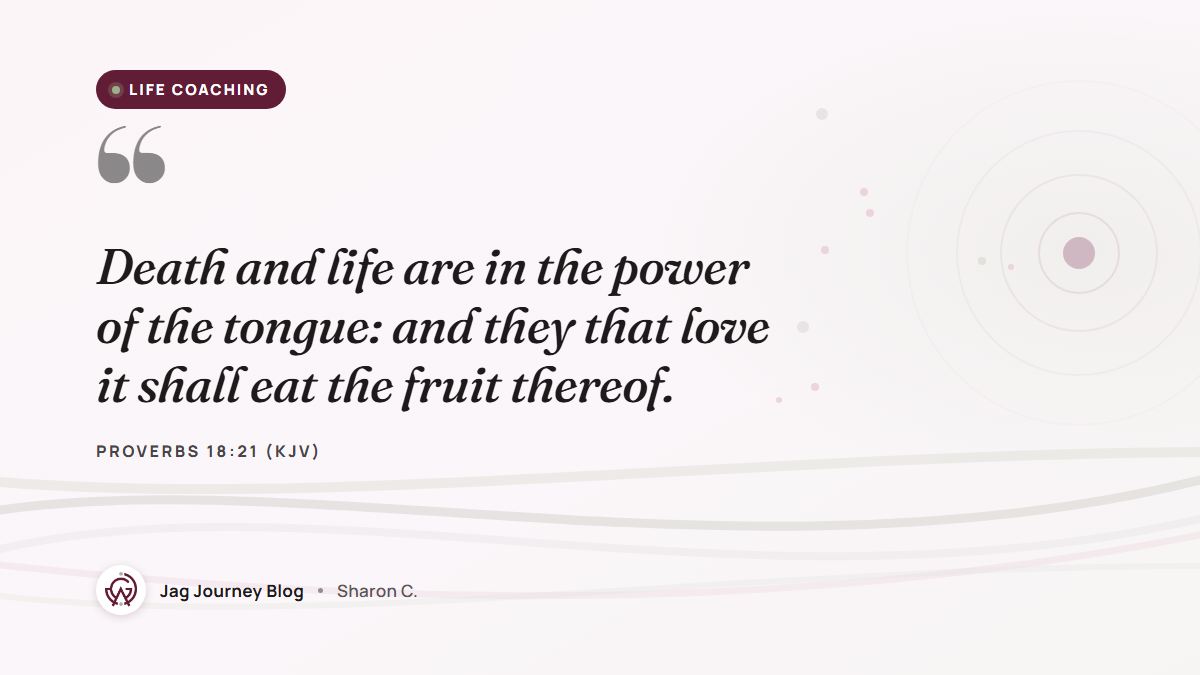
Proverbs puts it strongly, as you see in the verse above. Words are not neutral. They build up or tear down, including when we speak about ourselves.
Notice your patterns
Before trying to change, spend a day or two simply noticing. Each time you say something negative about yourself out loud, make a quick mental note or jot it on your phone. Notice:
- What did I say?
- What happened right before?
- Who was around?
- Was it a joke, a habit or something I truly believe?
Many people are surprised by how often they put themselves down. Some find their comments cluster around certain topics, like appearance or competence, or certain situations, like being around family or coworkers.
The one-week word fast
Once you know your patterns, try a one-week word fast. For seven days, commit to not saying anything negative about yourself out loud. Here is how to make it work:
- Choose your focus. Pick the category you use most, or commit to all of them.
- Tell someone. Ask a spouse, friend or older child to gently point it out when they hear you slip.
- Catch and correct. When you slip, pause and say a truer version out loud. "I'm such an idiot" becomes "I made a mistake, and I can fix it."
- Track it. Each evening, note how many times you slipped and how many times you corrected.
- Reflect at the end of the week. What did you notice about your words, your mood and how others responded?
The goal is not perfection. It is awareness and practice.
What to say instead
Replacement statements should be honest, not falsely positive. Some examples:
- Instead of "I'm so stupid," try "I didn't know that yet."
- Instead of "I'm terrible with names," try "I'm working on remembering names."
- Instead of "I look awful," try "I'm tired today," or simply say nothing about your appearance.
- Instead of "I always mess this up," try "That didn't go the way I hoped. Let me try again."
- Instead of "I'm a disaster," try "Today has been a lot."
Sometimes the best replacement is silence. You do not have to narrate every mistake.
Receiving kindness
Many people who put themselves down also deflect kindness. When someone compliments you, you may respond with "Oh, this old thing?" or "I didn't really do much." Part of changing your words is learning to receive kindness with a simple "Thank you." It feels small, but it is another way of speaking truth about yourself.
Rooted in truth
What you say about yourself often reflects what you believe about yourself. If you are a person of faith, consider what God says about you: that you are fearfully and wonderfully made (Psalm 139:14), loved (John 3:16) and His workmanship (Ephesians 2:10). Speaking in line with that truth is not arrogance. It is agreement.
Coach Sharon's U R Amazing Workshops focus on helping people know who they are in Christ and break free from negative thoughts and labels. You can contact us to learn more.
For the thoughts behind the words, Talking Back to Your Inner Critic offers a step-by-step approach, and Old Labels: Letting Go of Who You Were Told You Are can help with words that came from others.
Frequently asked questions
Is it harmful to make self-deprecating jokes?
Occasional light humor is normal, but frequent self-insults, even as jokes, can reinforce negative beliefs and shape how others see you. Notice how often you do it and how it affects you.
How do I stop putting myself down?
Start by noticing what you say and when. Then try a one-week word fast, replace self-insults with honest statements and ask someone close to you to help you notice slips.
What should I say when I make a mistake?
Describe the mistake without labeling yourself, such as "I forgot the meeting, and I'll reschedule." Focus on the fix rather than a judgment about who you are.
Related Posts

Learning Something New as an Adult Beginner
Learning a new skill as an adult can feel awkward, especially when you are used to being competent. Learn how to embrace being a beginner and build a simple 30-day learning plan.

Why Asking for Help Is So Hard and How to Start
Many capable people would rather struggle alone than ask for help. Learn what makes asking so hard and how to make one small, specific request this week.
Questions That Get Kids Talking at the Dinner Table
Asking how school went usually gets a one-word answer. These open, playful and thoughtful questions help kids of different ages open up at dinner, plus a simple question jar idea.

Arrange Your Home So Good Habits Are the Easy Choice
Your surroundings shape your choices more than you might think. Learn how to rearrange one room so good habits get easier and unwanted ones take more effort.
Handling Rejection Without Making It Your Identity
Rejection stings, whether it is a job, a relationship or a creative project. Learn to separate the event from your identity and use a simple reframe card to keep going.
Comments (0)
No comments yet. Be the first to share your thoughts!