Learning Something New as an Adult Beginner

Maybe you have always wanted to play the piano, speak Spanish, paint, swim, code, sew or understand your finances better. Maybe a new job requires a skill you do not have yet. Maybe you just want to grow.
Learning something new as an adult can be wonderful. It can also feel surprisingly uncomfortable. You are used to being competent, and suddenly you are fumbling, slow and making obvious mistakes, sometimes in front of people much younger than you. This post will help you embrace the beginner stage and build a plan that keeps you going.
Why being a beginner feels so uncomfortable
As adults, we spend much of our lives doing things we already know how to do. Our jobs, homes and routines rely on skills we built long ago. That competence feels good, and it becomes part of how we see ourselves.
Starting something new removes that comfort. You feel slow. You make mistakes. You may compare yourself to people who have been doing it for years, or to the speed you remember learning things as a child. Embarrassment, frustration and the urge to quit are all common.
None of that means you are too old or not talented enough. It means you are a beginner, and every beginner feels this way.
Permission to be bad at first
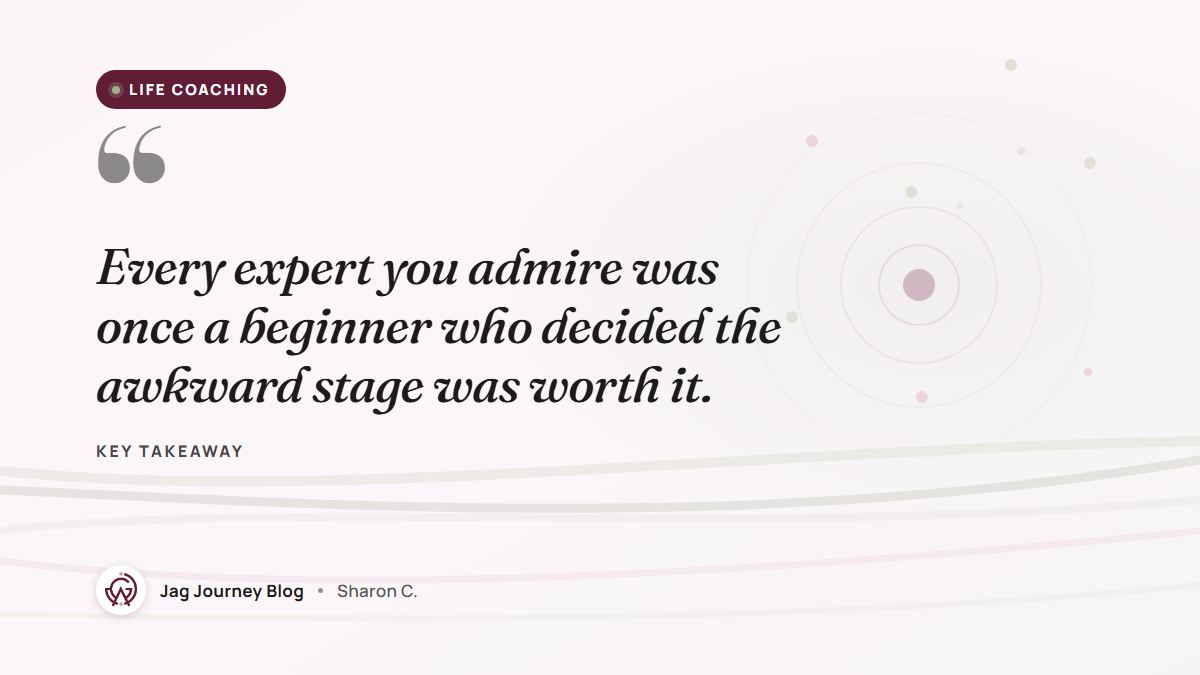
One of the most freeing things you can do is give yourself explicit permission to be bad at the new skill for a while. Say it out loud if you need to: "I'm going to be bad at this for a few months, and that's okay."
Expect wrong notes, clumsy sentences, wobbly lines and slow progress. Those are not signs of failure. They are the normal path of learning. Children learn many things quickly partly because they do not expect to be good right away. Adults can borrow that freedom.
Choose what to learn
If you have several ideas, choose one to focus on first. Ask:
- What do I genuinely want to learn, not just think I should?
- How will this fit my schedule and energy right now?
- What do I hope it will add to my life?
- What resources do I need, such as a class, a book, a teacher or equipment?
Starting with one skill gives it a real chance. You can add another later.
Build a 30-day learning plan
A simple 30-day plan helps you get past the initial awkwardness. Take about twenty minutes to write yours.
- Name the skill and your why. "Learn basic conversational Spanish so I can talk with families at our church."
- Set a small 30-day goal. "Introduce myself and hold a two-minute basic conversation."
- Choose your resource. An app, a class, a book, a video series or a tutor.
- Decide when you will practice. "Fifteen minutes every weekday after dinner."
- Choose a way to track progress. A calendar with check marks or a simple log.
- Plan one way to use the skill. "Practice with Maria after church on Sunday."
- Schedule a review on day 30. Note what you learned and decide what comes next.
Keep the goal modest. The aim of the first month is to build a habit and get through the hardest early stage.
Practice in small, regular sessions
Short, frequent practice usually beats long, occasional sessions. Fifteen minutes a day often leads to more progress than two hours once a week, and it is easier to fit into a busy life.
Attach your practice to something you already do every day, using Habit Stacking. For example, "After I clear the dinner table, I'll practice Spanish for fifteen minutes."
Find a teacher or community
Learning alone is possible, but learning with others often helps. Consider:
- A local class at a library, community center or college
- An experienced friend willing to teach you
- An online community of other learners
- A study partner learning the same skill
A teacher can correct mistakes early and encourage you through plateaus. Fellow learners remind you that everyone struggles at first.
Track progress you can see
Progress as a beginner can feel invisible. Make it visible:
- Record yourself playing or speaking on day one and again on day 30.
- Keep early drawings or projects to compare later.
- Write down new words, techniques or concepts you have learned.
- Note small milestones, such as finishing a lesson or your first full song.
Looking back at where you started is one of the best encouragements to keep going. How to Celebrate Small Wins So You Keep Going offers more ideas.
If fear of looking foolish is what holds you back from starting, When Fear of Failing Keeps You From Starting may help you take the first step.
Frequently asked questions
Is it too late to learn a new skill as an adult?
Adults learn new skills at many ages. You may learn differently than a child, but consistent practice, patience and good resources can lead to real progress.
How long does it take to learn a new skill?
It depends on the skill and how much you practice. Focus on steady progress over months rather than a deadline, and celebrate milestones along the way.
How do I stay motivated when progress is slow?
Keep practice sessions short and regular, track your progress visibly, learn alongside others and remind yourself why you started.
Related Posts
When Fear of Failing Keeps You From Starting
Fear of failure can keep good ideas on the shelf for years. Learn to name your fear, look at the worst, best and likely outcomes and climb a small courage ladder toward starting.
Habit Stacking: Attach a New Habit to One You Already Have
New habits are easier to remember when they ride along with something you already do every day. Here is how to find your anchor habits and build your first habit stack.

What to Do in the First Week After a Big Setback
When something big goes wrong, the first days can feel like a blur. Here is a gentle day-by-day guide for the first week after a setback, with a simple three-column exercise.
When You Feel Like a Fraud in a New Role
New roles often bring the fear of being found out. Learn why imposter feelings tend to show up during growth and how a simple competence ledger can steady your confidence.

Why Asking for Help Is So Hard and How to Start
Many capable people would rather struggle alone than ask for help. Learn what makes asking so hard and how to make one small, specific request this week.
Comments (0)
No comments yet. Be the first to share your thoughts!