What to Do in the First Week After a Big Setback

The business you worked so hard on closes. The job offer falls through. The relationship ends. The diagnosis comes back worse than you hoped. The big project fails publicly. Whatever the setback, the first days afterward can feel disorienting, like the ground shifted under your feet.
In those first days, people often feel pressure to bounce back quickly, make a new plan or explain what happened. You do not have to do all that right away. This post offers a gentle, day-by-day guide for the first week after a big setback.
Days one and two: let it land
In the first day or two, your main job is simply to let the setback be real. You do not need to fix it, understand it or find the lesson in it yet.
- Allow your feelings. Disappointment, anger, sadness, embarrassment, relief or numbness are all normal. Let them come without judging them.
- Lower expectations. If you can, reduce your commitments for a day or two. Do what must be done and let the rest wait.
- Avoid big announcements. You do not owe everyone an explanation right away.
- Pray honestly. If you are a person of faith, tell God exactly how you feel. The Psalms are full of people doing just that.
There is no right way to feel in these first days. Be as gentle with yourself as you would be with a friend.
Days three and four: separate facts from fears
By the third or fourth day, your mind may be racing with worst-case scenarios. This is a good time for a simple exercise that brings some clarity. Draw three columns on a page.
- Facts. What actually happened? Write only what you know to be true. "The investor said no." "I was let go on Tuesday."
- Fears. What are you afraid this means? Write them all down, even the extreme ones. "I'll never find another job." "Everyone thinks I'm a failure."
- Next. What is one thing that is within your control right now? "Update my resume." "Call my sister." "Check my savings and make a basic budget."
Seeing facts and fears side by side often shows you how much your mind has added to the story. Fears feel like facts in the moment. On paper, they look more like possibilities, many of them unlikely.
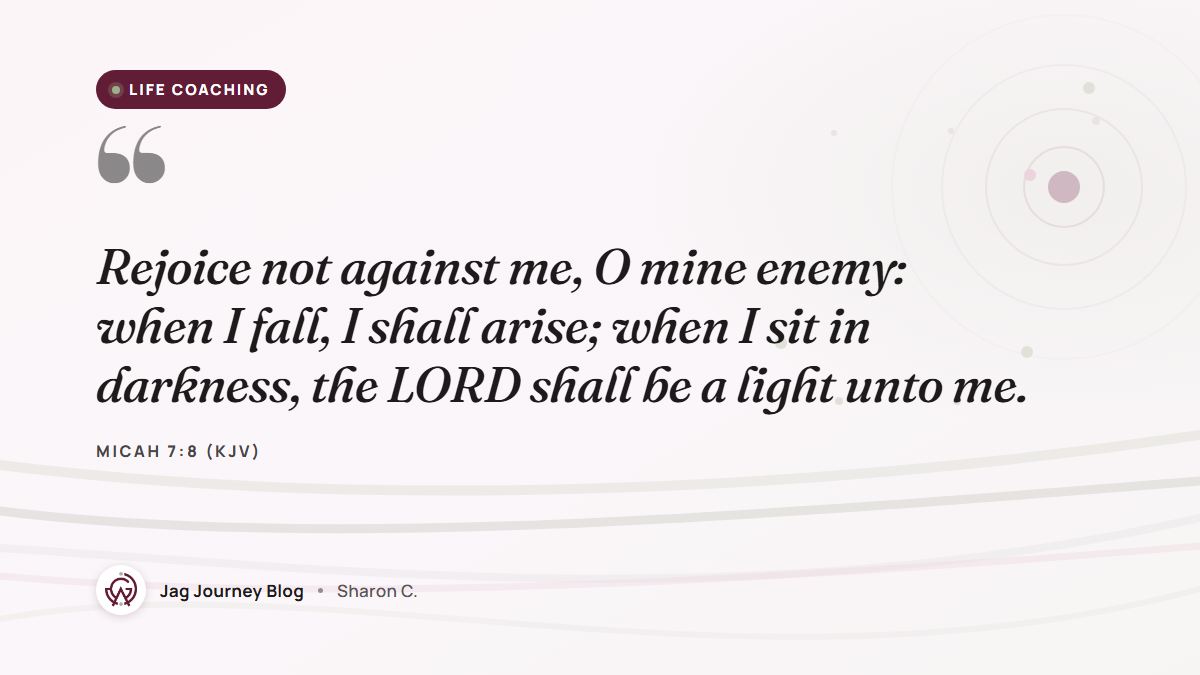
The prophet Micah wrote those words in a dark season. Falling was real. So was rising.
Days five and six: care for the basics and tell someone
Setbacks drain energy, so basic care matters even more than usual:
- Sleep. Keep a regular bedtime as much as possible.
- Food. Eat regular meals, even simple ones.
- Movement. A short walk outside can help clear your head.
- Connection. Tell one or two trusted people what happened and how you are doing.
You do not need to share with everyone, but carrying a setback completely alone usually makes it heavier. Choose people who will listen without rushing you to "look on the bright side." Why Asking for Help Is So Hard and How to Start can help if reaching out feels difficult.
Day seven: choose one small next step
By the end of the first week, look back at the "Next" column you wrote. Choose one small, concrete step and do it. Not a full plan for the rest of your life. Just one step.
- Send one email to a contact who might know of a job.
- Schedule a follow-up appointment.
- Spend thirty minutes writing down what you learned.
- Make a list of the bills due this month.
Taking one action reminds you that you still have agency, even when much is out of your control.
What not to decide this week
In the first week after a big setback, it is often wise to avoid making major, hard-to-reverse decisions unless they are truly urgent. Moving, quitting, ending relationships or making large financial commitments are usually better made once the initial shock has passed and you can think more clearly.
If a decision cannot wait, talk it through with someone you trust first. For legal, medical or financial decisions, consult a qualified professional.
When the setback is too heavy
Some setbacks bring grief, despair or a sense that you cannot go on. If you are feeling hopeless, unable to function or having thoughts of harming yourself, please reach out for help right away. In the US, you can call or text 988 to reach the Suicide and Crisis Lifeline any time, day or night. A licensed counselor or your doctor can also help.
A setback is an event, not your identity. In the weeks ahead, Handling Rejection Without Making It Your Identity and Staying Steady Through a Long, Hard Season can help you rebuild. For now, it is enough to get through this week with kindness toward yourself. If your setback involves a goal you care about, You Missed a Week: How to Restart a Goal Without Shame has more on beginning again.
Related Posts
After a Layoff: A Practical Plan for the First Two Weeks
A layoff can leave you shocked, worried and unsure where to start. This two-week plan helps you handle feelings, paperwork, money basics and next steps one day at a time.
Gentle Steps Forward When Loss Changes Everything
Grief after the loss of someone you love is not a problem to solve. Learn gentle ways to care for yourself, accept support and take small steps forward at your own pace.

Learning Something New as an Adult Beginner
Learning a new skill as an adult can feel awkward, especially when you are used to being competent. Learn how to embrace being a beginner and build a simple 30-day learning plan.
How to Forgive Someone Who Hurt You Without Excusing the Harm
Forgiveness is not the same as excusing harm, forgetting or instantly trusting again. Learn what forgiveness is, what it is not and a gentle unsent letter exercise to begin.
Gratitude in a Hard Season Without Faking Happiness
Gratitude does not require pretending everything is fine. Learn how to hold honest lament and real thankfulness together, with a simple two-line practice for hard days.
Comments (0)
No comments yet. Be the first to share your thoughts!