How to Forgive Someone Who Hurt You Without Excusing the Harm
"Just forgive and forget." Many people have heard those words when they were hurting, and many have felt worse afterward. How can you forget something that changed your life? And does forgiving mean the other person gets away with it?
Forgiveness is one of the most important and most misunderstood ideas in human relationships and in the Christian faith. This post explains what forgiveness is, what it is not and how you might begin the process honestly.
What forgiveness is
At its heart, forgiveness is a decision to release someone from a debt they owe you. The debt is real. They did something wrong, and it cost you something. Forgiveness chooses not to keep demanding repayment through resentment, revenge or holding it over them.
Forgiveness is primarily something that happens within you. It can happen even if the other person never apologizes, never changes and never knows. For people of faith, it often grows out of an awareness of how much we have been forgiven ourselves: "And be ye kind one to another, tenderhearted, forgiving one another, even as God for Christ's sake hath forgiven you." (Ephesians 4:32, KJV).
What forgiveness is not
Much of the confusion around forgiveness comes from things it is often mistaken for:
- It is not excusing. Forgiveness does not say "What you did was okay." It says "What you did was wrong, and I am choosing to release the debt."
- It is not forgetting. You may always remember. Forgiveness changes how you carry the memory, not whether it exists.
- It is not denying the pain. You can forgive and still grieve what happened.
- It is not the same as reconciliation. You can forgive someone without restoring the relationship.
- It is not automatic trust. Trust is rebuilt through changed behavior over time.
- It is not staying in danger. Forgiving someone does not require you to remain in a harmful or unsafe situation.
- It is not a one-time feeling. It is often a decision you make again and again.
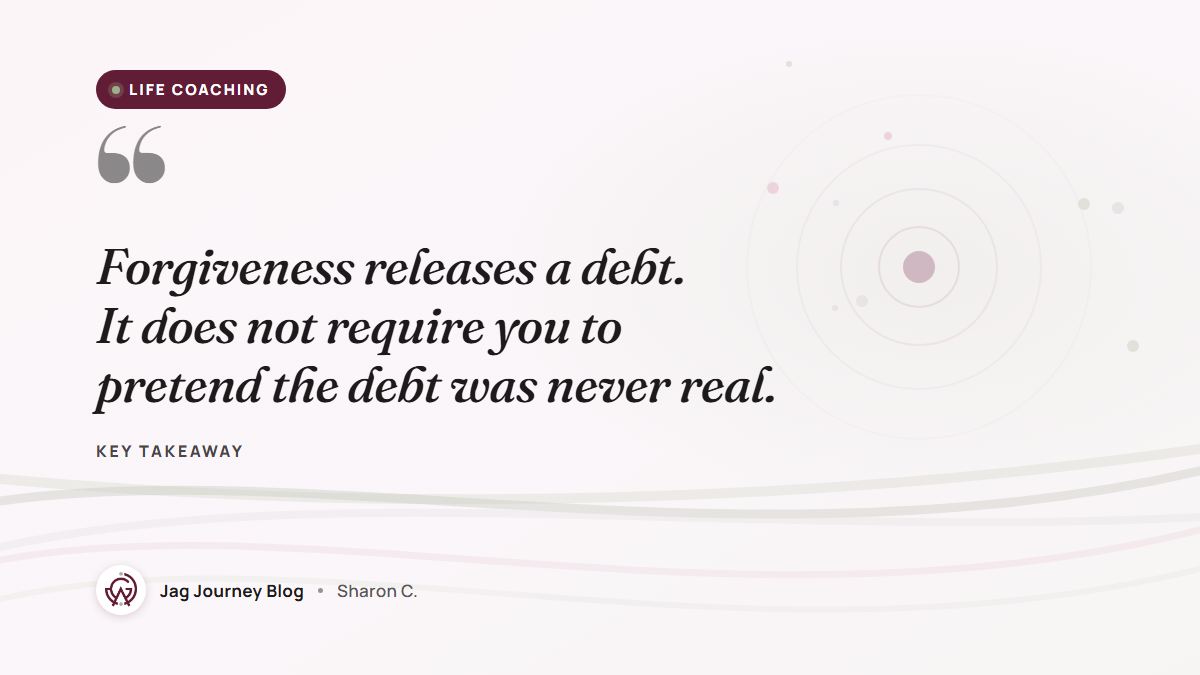
Forgiveness, reconciliation and trust are three different things
It can help to see these as three separate steps that do not always happen together.
Forgiveness happens within you. It requires only your willingness.
Reconciliation is restoring the relationship. It requires both people, and usually requires the other person to acknowledge the harm and change.
Trust is confidence that the person will not hurt you again. It is rebuilt slowly, through consistent actions.
You might forgive a former friend who betrayed you, reconcile partially by being cordial at church and still choose not to share private matters with them. All of that can be healthy. Forgiveness does not demand that you return to exactly how things were.
Forgiveness is often a process
Small hurts may be forgiven quickly. Deep wounds usually take time. You might decide to forgive, then feel the anger return a week later. That does not mean you failed. It means the wound is still healing.
Many people find it helpful to think of forgiveness as a direction rather than a single moment. Each time the hurt resurfaces, you choose again to release the debt. Over time, the hurt usually loses some of its grip.
Be patient with yourself. Rushing forgiveness, or pretending you have forgiven when you have not, can leave the wound buried rather than healed.
The unsent letter
This exercise can help you begin the forgiveness process honestly. It is a letter you write but never send.
- Find a private, quiet time. Give yourself at least thirty minutes.
- Write to the person who hurt you. Address them by name.
- Describe what happened. Be specific and honest. You do not need to soften it.
- Describe how it affected you. Name the losses, the pain, the ways it changed you.
- Name what you wish had happened instead.
- If you are ready, write a sentence of release. Something like, "I am choosing to release the debt you owe me. I am not saying what you did was okay. I am choosing not to carry this into the rest of my life." If you are not ready yet, write, "I am not ready to forgive yet, but I want to be."
- Close in a way that feels right. Some people pray, some tear up or safely burn the letter, some keep it to see how they have grown.
The point is not to send it. The point is to let yourself be fully honest, which is often the first step toward release.
When the hurt is deep
Some hurts are too heavy to work through alone. If you were abused, betrayed in a way that upended your life or experienced trauma, please consider working with a licensed counselor or therapist. They can help you process what happened safely and at a healthy pace. Forgiveness is not a shortcut around healing.
If you are in a relationship where you are being harmed now, your safety comes first. Reach out to a domestic violence hotline, a counselor or local authorities, and call 911 in an emergency. If you are struggling with thoughts of harming yourself, call or text 988 in the US to reach the Suicide and Crisis Lifeline.
If you are the one who needs to make things right, read How to Apologize Well, Without Excuses. For more on limits after a hurt, see What a Healthy Boundary Is (and What It Is Not).
Frequently asked questions
Do I have to forgive someone who is not sorry?
Forgiveness can happen without an apology because it is a choice within you. Reconciliation and trust, however, usually require the other person to acknowledge the harm and change.
Does forgiving someone mean I have to let them back into my life?
No. Forgiveness and reconciliation are different. You can forgive someone and still keep healthy distance or boundaries, especially if the relationship was harmful.
What if I forgave someone but still feel angry?
That is common, especially with deep hurts. Forgiveness is often a process, so you may need to choose it again each time the feelings return. A counselor can help if the anger feels stuck.
Related Posts
Gentle Steps Forward When Loss Changes Everything
Grief after the loss of someone you love is not a problem to solve. Learn gentle ways to care for yourself, accept support and take small steps forward at your own pace.

What to Do in the First Week After a Big Setback
When something big goes wrong, the first days can feel like a blur. Here is a gentle day-by-day guide for the first week after a setback, with a simple three-column exercise.
Gratitude in a Hard Season Without Faking Happiness
Gratitude does not require pretending everything is fine. Learn how to hold honest lament and real thankfulness together, with a simple two-line practice for hard days.
Handling Rejection Without Making It Your Identity
Rejection stings, whether it is a job, a relationship or a creative project. Learn to separate the event from your identity and use a simple reframe card to keep going.

How to Find and Work With an Accountability Partner
The right accountability partner can help you follow through on goals that matter. Learn who to ask, what to agree on and how to run check-ins that actually help.
Comments (0)
No comments yet. Be the first to share your thoughts!