Caring Less About What People Think Without Becoming Cold

You hold back from wearing the outfit you love. You do not share your idea in the group chat. You skip the dance class because you might look silly. You make choices about your home, your parenting, your faith or your career based partly on what you imagine others will say.
Caring what people think is human. We are made for relationship, and other people's views matter. But when worry about opinions starts making your decisions, it can keep you small. The goal is not to stop caring altogether and become cold or defensive. It is to care wisely, giving weight to the right voices and letting the rest go.
Why other people's opinions feel so powerful
There are good reasons we care what others think. Belonging matters. Rejection hurts. In families, schools and workplaces, approval often brings real benefits.
Some people feel this pull more strongly than others. If you grew up where love felt conditional, where you were often criticized or where fitting in was necessary for safety, you may be especially sensitive to judgment. That sensitivity made sense once. It may not serve you now.
Caring vs living for approval
There is a difference between caring about people and living for their approval.
Caring about people means you consider how your choices affect them, listen to feedback and treat others with kindness.
Living for approval means you make decisions mainly to avoid disapproval, shape yourself to fit others' expectations and feel anxious when someone might not like you.
The first is love. The second is fear. You can keep the first while loosening the second.
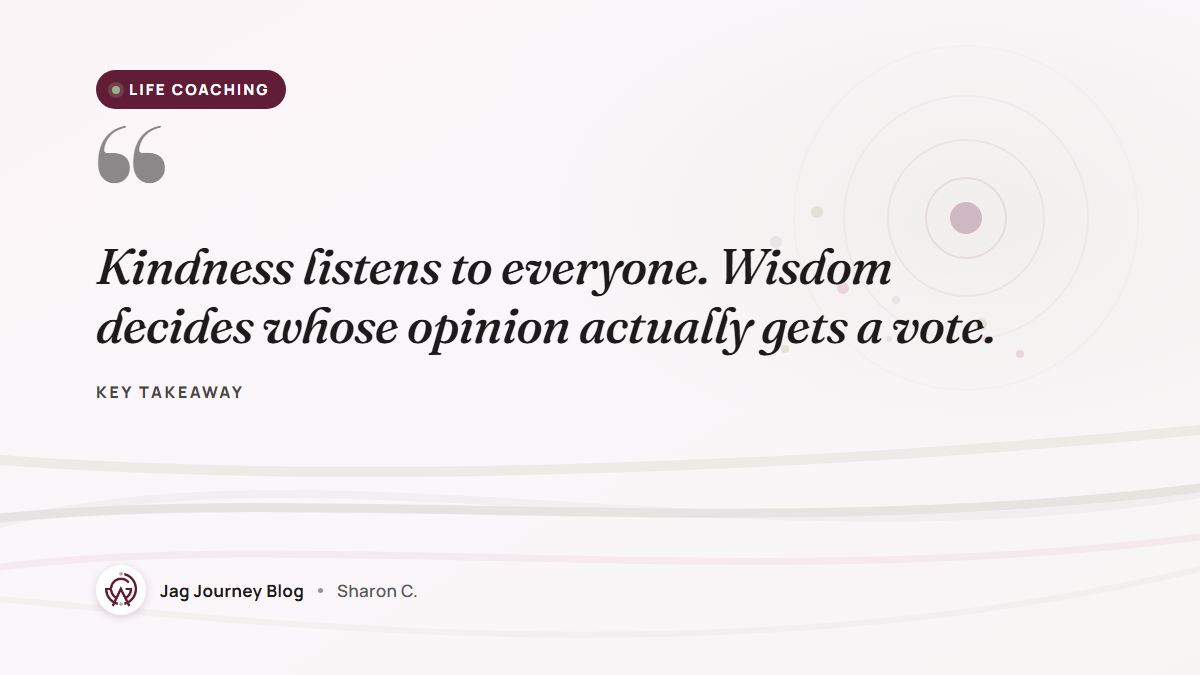
The opinion circles
This exercise helps you decide whose opinions deserve the most weight. It takes about fifteen minutes.
- Draw three circles, one inside the other.
- In the inner circle, write the names of a few people whose opinions you genuinely value. People who know you well, love you, have shown good judgment and want what is best for you. Usually three to six people.
- In the middle circle, write people whose views you consider in specific areas. A manager about work, a doctor about health, a mentor about ministry.
- In the outer circle, write groups or people whose opinions you tend to worry about but who do not really know you: acquaintances, strangers online, people you are trying to impress.
- Notice where your worry goes. Many people discover they spend the most energy worrying about the outer circle, which deserves the least.
When you feel anxious about what someone will think, ask: "Which circle are they in?" If they are in the outer circle, their opinion gets a much smaller vote.
Feedback or noise?
Not all opinions are equal. Some are useful feedback. Others are noise.
Feedback is usually specific, offered by someone who knows the situation, and aimed at helping you grow. "Your presentation was strong, but the middle section felt rushed."
Noise is usually vague, offered by someone with little stake or knowledge, or driven by their own preferences or insecurities. "That's a weird thing to do."
Take feedback seriously, even when it is hard to hear. How to Receive Criticism Without Crumbling or Fighting Back can help. Let noise pass without letting it steer you.
Act on your values, not the crowd
When you know what you value, other people's opinions have less power over you. Before a decision, ask, "What would I do if I knew no one would ever judge this choice?" Then ask, "Does that choice fit my values?"
Scripture offers a freeing perspective on who our work is ultimately for: "And whatsoever ye do, do it heartily, as to the Lord, and not unto men;" (Colossians 3:23, KJV). Living for an audience of One does not make you careless about people. It frees you from being controlled by them.
If you have not yet named your values, start with Name Your Core Values in Five Steps.
Stay warm while you let go
Caring less about opinions does not mean becoming harsh, defensive or dismissive. You can:
- Listen respectfully, even when you disagree.
- Thank people for input you will not follow.
- Stay kind when someone disapproves of your choice.
- Change your mind when someone offers real wisdom.
The aim is a calm security that lets you hear others without being ruled by them.
If your worry about others' opinions shows up as constant yes-saying, Recovering People Pleaser: Small Steps Toward Honest Answers addresses that pattern directly.
Frequently asked questions
How do I stop caring so much about what people think?
Decide whose opinions truly matter to you, separate useful feedback from noise and make choices based on your values rather than on imagined judgment. Practice in small, low-risk situations first.
Is it bad to care what others think?
No. Caring about others and considering their perspectives is healthy. It becomes a problem when fear of disapproval drives your decisions and keeps you from living by your values.
How can I handle criticism of my choices from family?
Listen respectfully, consider whether there is useful feedback and then make your decision. You can acknowledge their concern kindly without changing course.
Related Posts

Why Asking for Help Is So Hard and How to Start
Many capable people would rather struggle alone than ask for help. Learn what makes asking so hard and how to make one small, specific request this week.

How to Find and Work With an Accountability Partner
The right accountability partner can help you follow through on goals that matter. Learn who to ask, what to agree on and how to run check-ins that actually help.

Learning Something New as an Adult Beginner
Learning a new skill as an adult can feel awkward, especially when you are used to being competent. Learn how to embrace being a beginner and build a simple 30-day learning plan.

Coaching Questions That Help a Friend Think It Through
When a friend brings you a problem, the most helpful response is often a good question, not advice. Learn coaching questions that help people find their own answers.

Boundaries for Generous People Who Serve at Church
Serving at church is a gift, but saying yes to every need can lead to exhaustion. Learn how to check your capacity, serve in seasons and talk honestly with church leaders.
Comments (0)
No comments yet. Be the first to share your thoughts!