Coaching Questions That Help a Friend Think It Through

A friend calls, upset about a decision at work. Your sister is unsure whether to move. A coworker is frustrated with a family situation. Your natural instinct may be to jump in with advice: "Here's what I would do."
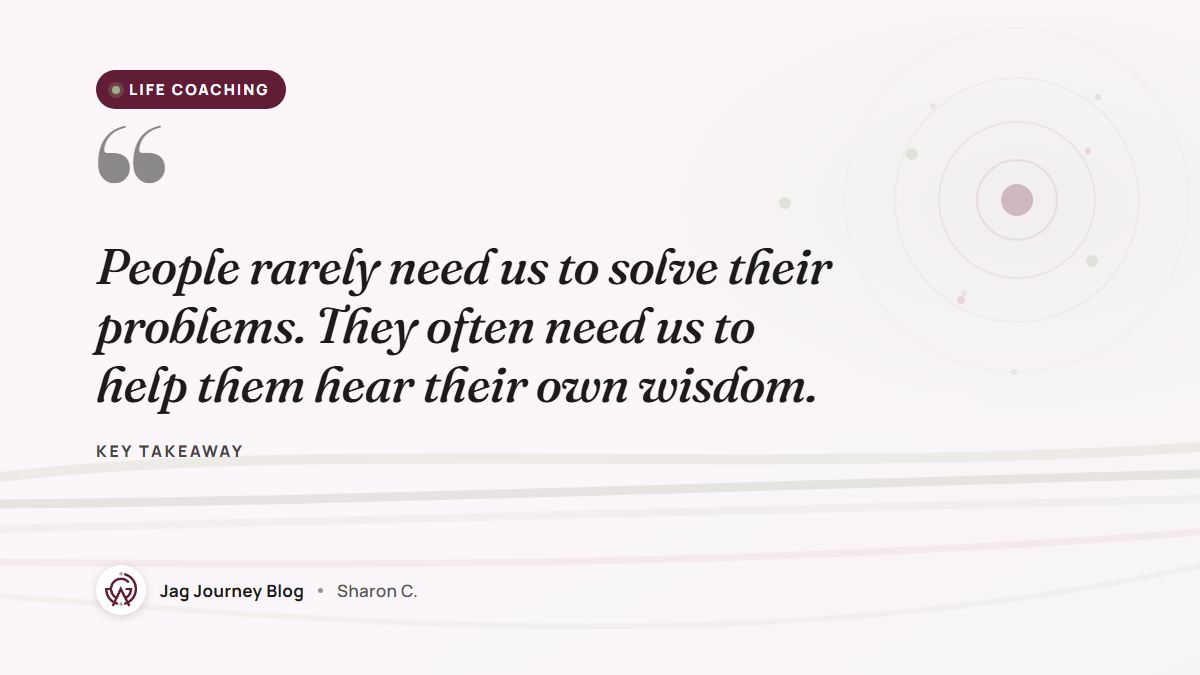
Sometimes advice helps. Often, though, people already know more about their situation than we do. What they need is someone to help them think it through. Coaches do this with questions. You do not have to be a professional coach to use the same approach with friends, family and coworkers.
Why advice often falls flat
Advice can miss the mark for a few reasons:
- We do not know the full situation. The person living it knows details we do not.
- Our solution fits our life, not theirs. What would work for us may not fit their values, resources or personality.
- People are more committed to their own ideas. A solution someone discovers is usually one they follow through on.
- Advice can feel like judgment. Even well-meant suggestions can make someone feel they should have figured it out already.
Questions avoid these problems. They help people explore, clarify and decide for themselves.
An old proverb captures the idea: "Counsel in the heart of man is like deep water; but a man of understanding will draw it out." (Proverbs 20:5, KJV). Good questions draw out the wisdom already there.
The coaching posture
Before the questions, there is a posture. Coaching questions work best when you are:
- Curious. Genuinely interested in what the other person thinks.
- Patient. Willing to sit with silence while they think.
- Non-judgmental. Open to answers you would not choose yourself.
- Focused on them. Not steering the conversation toward your own story or opinion.
You do not need to fix anything. Your job is to help them think more clearly.
A question bank
Here are questions you can use, grouped by what they help with. Choose one or two at a time. You do not need to ask them all.
Clarifying questions
- What is going on?
- What feels most important about this?
- What would you like to be different?
Exploring questions
- What have you already tried?
- What is getting in the way?
- What are you most worried about?
- What do you think is really underneath this?
Options questions
- What options do you see?
- What else could you do?
- If you knew you could not fail, what would you try?
- What would you tell a friend in this situation?
Action questions
- What feels like the right next step?
- When will you do it?
- What might get in the way?
Support questions
- How can I help?
- Who else could support you?
- Would it help if I checked in with you next week?
If these feel familiar, they follow a similar shape to The GROW Model: goal, reality, options and will.
Questions to avoid
Some questions sound like questions but are really advice or judgment in disguise:
- Leading questions. "Don't you think you should quit?" suggests the answer.
- "Why" questions that sound accusing. "Why would you do that?" can feel like criticism. Try "What led you to that decision?"
- Too many questions at once. Ask one, then wait.
- Questions about your own curiosity. Stay focused on what helps them, not on details you want to know.
Practice three questions
Here is an exercise for this week.
- Choose three questions from the bank above that feel natural to you.
- Write them on a card or in your phone.
- The next time someone shares a problem, resist the urge to give advice right away.
- Ask one of your questions, then listen fully.
- Reflect back what you hear. "It sounds like you're torn between staying for the team and wanting more growth."
- Ask a second question if it fits.
- Afterward, notice what happened. Did they come to their own insight?
You may be surprised by how much people figure out when given space and a good question. Listening to Understand pairs well with this practice.
When a friend needs more than a good listener
Coaching questions are helpful for everyday challenges. Some situations, though, call for professional help. If a friend talks about feeling hopeless, being in danger, harming themselves or struggling with abuse, addiction or serious mental health concerns, gently encourage them to reach out to a licensed counselor, doctor or crisis line. In the US, they can call or text 988 at any time. Stay with them and help them connect if you can.
Learning from a coach
If you enjoy helping people think through challenges, you may also benefit from being coached yourself. Coach Sharon's U R Amazing Workshops offer interactive, Scripture-based teaching and discussion in a mini workshop or four-week format. To learn more, contact us.
Frequently asked questions
What are good coaching questions to ask a friend?
Open questions like "What would you like to be different?", "What options do you see?" and "What feels like the right next step?" help a friend think through a problem without being told what to do.
Is it wrong to give a friend advice?
No. Advice can be helpful, especially when someone asks for it. Starting with questions often helps them find their own answer, which they are more likely to act on.
How do I stop myself from giving advice too quickly?
Prepare a few questions in advance, ask one and then listen fully. Reflecting back what you hear before responding also helps slow down the urge to fix.
Related Posts
Coach, Counselor or Therapist: Which Kind of Help Do You Need?
Coaching, counseling and therapy can all help, but they are not the same. Learn what each one does, when licensed care should come first and how to choose wisely.

Questions That Get Kids Talking at the Dinner Table
Asking how school went usually gets a one-word answer. These open, playful and thoughtful questions help kids of different ages open up at dinner, plus a simple question jar idea.

How to Find and Work With an Accountability Partner
The right accountability partner can help you follow through on goals that matter. Learn who to ask, what to agree on and how to run check-ins that actually help.

Thinking About a Career Change? Questions to Ask First
Before you leave a job or field, a few honest questions can save you from trading one frustration for another. Use this question set to think through a career change.
Discover Your Gifts by Asking the People Around You
Others often see your strengths more clearly than you do. Learn how to ask five people what they see in you, look for patterns in their answers and put your gifts to work.
Comments (0)
No comments yet. Be the first to share your thoughts!