Making Peace With a Decision You Cannot Undo
The house you sold. The job you turned down. The words you said in anger. The school you chose for your child. The investment that went badly. The relationship you ended, or stayed in too long. Some decisions cannot be undone, and regret can replay them over and over.
Regret is a normal human experience, and sometimes it teaches us something valuable. But when it becomes a constant companion, it can steal your peace, your confidence and your ability to make new decisions. This post offers a path toward making peace with a decision you cannot reverse.
Why regret sticks
Regret tends to stick for a few reasons:
- Hindsight is clear. Now you know how things turned out, so the right choice seems obvious.
- The road not taken looks perfect. You imagine the other option going smoothly, without its own problems.
- It feels like responsibility. Some people believe that continuing to feel bad is the right way to take ownership.
- There is an unresolved piece. Something remains unspoken, unrepaired or unforgiven.
Recognizing why your regret persists is the first step toward loosening it.
Judge it by what you knew then
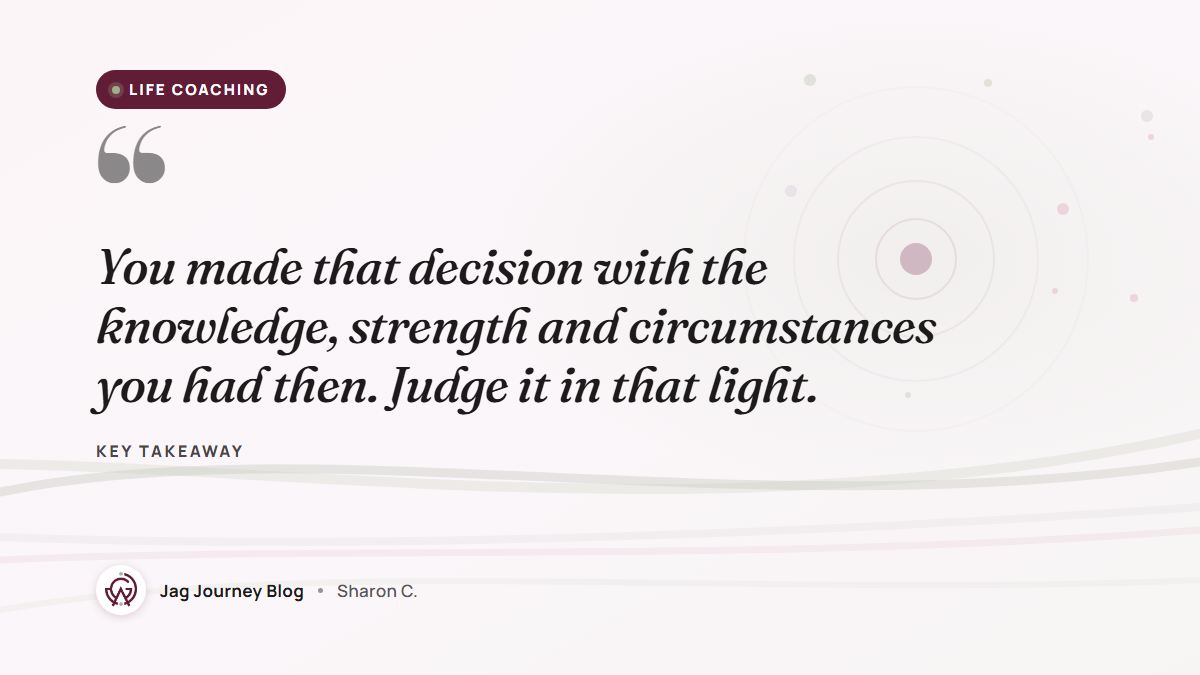
One of the most important shifts is to evaluate a past decision by what you knew at the time, not by what you know now.
Ask yourself:
- What information did I have?
- What pressures was I under?
- What options seemed available?
- What was I feeling, and what was I afraid of?
- What resources, support and maturity did I have at that point in life?
Often, when you look at it this way, the decision makes more sense. You may still wish it had gone differently, but you can see that you were doing your best with what you had. That is not an excuse. It is a fair view.
Separate the decision from the outcome
A good decision can lead to a bad outcome, and a poor decision can turn out fine. Outcomes depend on many things outside your control: other people's choices, timing, health, the economy and plain chance.
Ask: "Was the decision reasonable, even though the outcome was painful?" If yes, you can let go of some of the blame. If the decision really was poor, perhaps rushed, careless or against your values, that is worth acknowledging honestly. Even then, it does not define you.
Learn what you can
Regret becomes useful when it turns into learning. Write down:
- What would I do differently, knowing what I know now?
- What warning signs did I miss?
- What do I want to remember for future decisions?
Once you have captured the lesson, you no longer need to keep replaying the decision to hold onto it. The lesson is written down.
Make amends where possible
If your decision hurt someone, consider whether you can make amends. An honest apology, a repaired relationship or a practical step to make things right can lift a significant weight. How to Apologize Well, Without Excuses walks through how to do this sincerely.
Sometimes amends are not possible. The person may have passed away, contact may be unsafe or the situation may be complicated. In those cases, writing what you would say, or praying it, can still bring some peace.
Receive grace
For people of faith, regret meets the good news of grace. God does not wait for us to stop regretting before offering forgiveness and a fresh start. Through the prophet Isaiah, God told His people: "Remember ye not the former things, neither consider the things of old. Behold, I will do a new thing; now it shall spring forth; shall ye not know it?" (Isaiah 43:18-19, KJV).
That does not mean pretending the past did not happen. It means the past does not get the final word. You can carry its lessons without carrying its full weight.
The then-and-now letter
This exercise helps you look at a past decision with compassion. Set aside thirty minutes.
- Write a letter to your past self, the person who made the decision. Address them by name and age at the time.
- Describe what they were facing. The pressures, the information, the fears.
- Acknowledge what happened. Be honest about the outcome and any harm.
- Name what you have learned since.
- Offer understanding. What would you say to a friend who made that choice in those circumstances?
- Close with release. Write something like, "I forgive you. I'm carrying the lesson forward and letting the rest go."
Read it out loud if you can. Some people keep the letter, and others prefer to tear it up once it is written.
When regret will not lift
If regret has turned into persistent guilt, shame, sleeplessness or hopelessness, please consider talking with a licensed counselor. Long-standing regret, especially tied to loss or trauma, often eases with professional support. If you have thoughts of harming yourself, call or text 988 in the US to reach the Suicide and Crisis Lifeline.
For future choices, Stuck Overthinking a Decision? Set a Deadline and a Default can help you decide without fear of future regret taking over.
Frequently asked questions
How do I stop regretting a decision I cannot change?
Evaluate the decision by what you knew at the time, separate it from the outcome, write down what you learned, make amends where possible and practice accepting grace for the past.
Is regret ever helpful?
Yes, when it helps you learn and make better choices in the future. It becomes harmful when it keeps replaying without leading to growth or peace.
What if my decision hurt someone else?
Consider an honest apology or other ways to make amends, if it is safe and appropriate. If that is not possible, writing or praying what you would say can still bring some peace.
Related Posts
How to Make a Hard Decision Using Your Values
When every option has pros and cons, your values can break the tie. Here is a simple way to score your options against what matters most to you and decide with peace.
Too Many Goals? How to Choose the One That Matters Now
A long list of goals can leave you busy but stuck. This simple triage helps you weigh each goal by impact, timing, energy and season, then choose one focus to start with.
How to Forgive Someone Who Hurt You Without Excusing the Harm
Forgiveness is not the same as excusing harm, forgetting or instantly trusting again. Learn what forgiveness is, what it is not and a gentle unsent letter exercise to begin.
Gentle Steps Forward When Loss Changes Everything
Grief after the loss of someone you love is not a problem to solve. Learn gentle ways to care for yourself, accept support and take small steps forward at your own pace.
Handling Rejection Without Making It Your Identity
Rejection stings, whether it is a job, a relationship or a creative project. Learn to separate the event from your identity and use a simple reframe card to keep going.
Comments (0)
No comments yet. Be the first to share your thoughts!