How to Name What You Are Feeling
"How are you?" "Fine." "Good." "Busy." "Tired."
Many of us use only a handful of words to describe how we feel. Sometimes that is just politeness. But often, we genuinely are not sure what we are feeling. We know something is off, or that we are stressed, but we cannot say exactly what is going on inside.
Learning to name your feelings more clearly is a simple skill that can make a real difference in how you handle stress, make decisions and communicate with others. This post offers practical ways to build that skill.
Why naming feelings matters
When you can name a feeling, you can respond to it more wisely. Many people find that putting a feeling into words makes it feel more manageable. A vague sense of being upset becomes "I'm disappointed that I wasn't included" or "I'm anxious about tomorrow's appointment." Once you know what you are feeling, you can decide what to do about it.
Naming feelings also helps relationships. Saying "I'm feeling overwhelmed" is clearer than snapping at someone or withdrawing in silence. It gives the people around you a chance to understand and help.
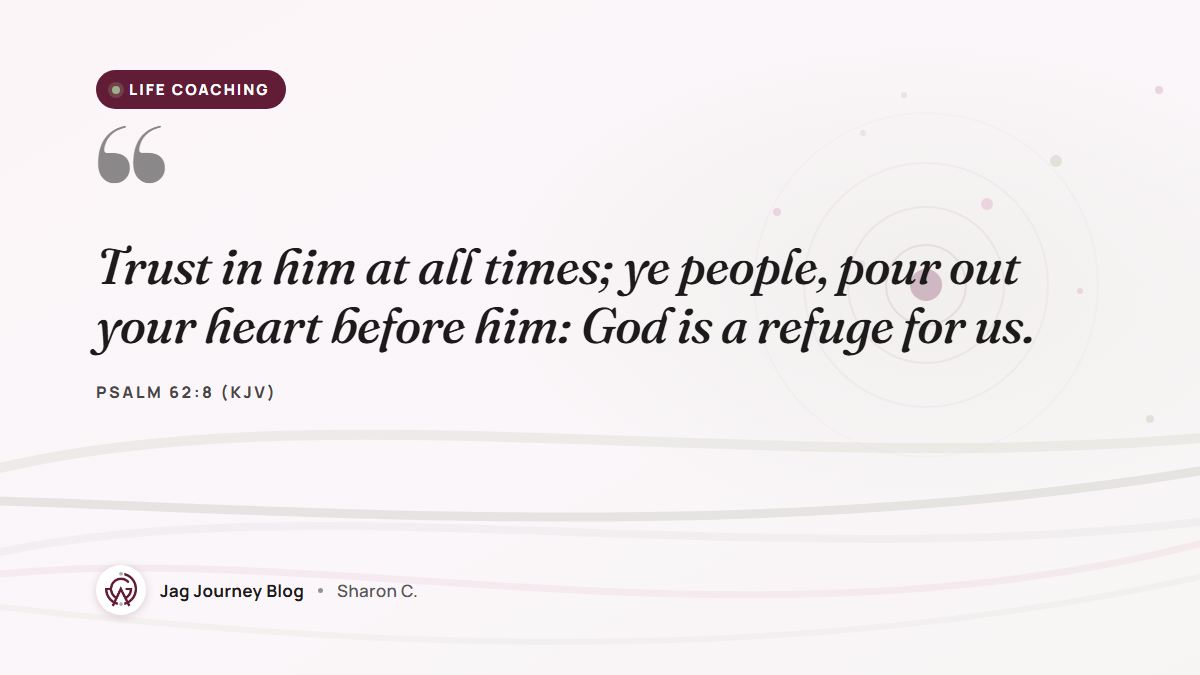
For people of faith, naming feelings is also part of honest prayer. The Psalms are full of people telling God exactly how they felt, from joy to despair. The verse above invites us to pour out our hearts to Him.
Go beyond fine, good and bad
A richer emotional vocabulary helps you describe what you feel more precisely. Here are some feeling words grouped by family:
- Happy: content, grateful, hopeful, joyful, peaceful, relieved, proud, excited
- Sad: disappointed, lonely, discouraged, heartbroken, grieving, hurt, empty
- Afraid: anxious, worried, nervous, overwhelmed, insecure, uneasy, panicked
- Angry: frustrated, irritated, resentful, annoyed, betrayed, jealous, defensive
- Ashamed: embarrassed, guilty, inadequate, humiliated, exposed
- Tired: drained, numb, weary, burned out, depleted
Keep this list handy. When you notice an uncomfortable feeling, look at the list and see which words fit best. Often more than one does.
Check in with your body
Feelings often show up in the body before we can name them. A quick body check can give you clues:
- Tight chest or shallow breathing may point to anxiety or fear.
- Clenched jaw or fists may point to anger or frustration.
- Heaviness or low energy may point to sadness or discouragement.
- Warm face may point to embarrassment or anger.
- Restlessness may point to worry or excitement.
- Lightness or ease may point to peace or joy.
These are general patterns, not rules. Everyone experiences emotions in their body a little differently. Paying attention to your own signals can help you notice feelings earlier. Noticing Stress Early: Your Personal Warning Lights explores this further.
The feelings check-in
This simple practice helps you build the habit of noticing and naming feelings. It takes about one minute, three times a day.
- Choose three times each day, such as morning, midday and evening. Set a gentle reminder if needed.
- Pause and take one slow breath.
- Check your body. Notice any tension, heaviness, energy or ease.
- Ask yourself, "What am I feeling right now?"
- Name one to three feelings, using the vocabulary list if it helps.
- Ask, "What might this feeling be telling me?" For example, anxiety might signal that you need to prepare for something, or loneliness might signal that you need connection.
- Optionally, jot it down in a notes app or journal.
Try this for one week. Many people find that it gets easier and more natural with practice.
Feelings are information, not commands
Naming a feeling does not mean you have to act on it. Feelings are information about what is happening inside you. They are not instructions.
You might feel angry and choose to wait before responding. You might feel anxious and still go to the interview. You might feel discouraged and still take one small step forward. Naming the feeling gives you a moment to choose your response. When You Snap: Learning to Respond Instead of React builds on this idea.
Sharing feelings with others
When you can name your feelings, sharing them with trusted people becomes easier. Try simple statements:
- "I'm feeling overwhelmed with everything this week."
- "I felt hurt when you didn't call back."
- "I'm nervous about the doctor's appointment tomorrow."
Clear, honest statements help others understand you and often lead to better conversations.
When feelings feel overwhelming
If your feelings frequently feel overwhelming, if you feel numb most of the time or if sadness, anxiety or anger are affecting your daily life, please talk with your doctor or a licensed counselor. They can help in ways that self-reflection alone cannot. If you are in crisis or having thoughts of harming yourself, call or text 988 in the US to reach the Suicide and Crisis Lifeline.
Frequently asked questions
How can I identify my emotions better?
Build a richer feelings vocabulary, notice what your body is telling you and practice a short feelings check-in a few times a day. Naming feelings gets easier with practice.
Why is it hard for me to know what I am feeling?
Many people were not taught to notice or name emotions growing up, or learned to push them aside. It is a skill that can be developed at any age.
Do I have to act on my feelings?
No. Feelings are information, not commands. Naming a feeling gives you space to choose how to respond in a way that fits your values.
Related Posts
Co-Parenting Communication That Keeps Kids Out of the Middle
Co-parenting after separation is hard, but children do better when adults communicate calmly. Learn a business-like approach, written channels and a simple message template.

What to Do in the First Week After a Big Setback
When something big goes wrong, the first days can feel like a blur. Here is a gentle day-by-day guide for the first week after a setback, with a simple three-column exercise.
Giving Honest Feedback People Can Actually Hear
Feedback is easier to hear when it is specific, timely and kind. Learn a simple observation, impact and request pattern you can use at work, at home and in volunteer settings.

Learning Something New as an Adult Beginner
Learning a new skill as an adult can feel awkward, especially when you are used to being competent. Learn how to embrace being a beginner and build a simple 30-day learning plan.
After a Layoff: A Practical Plan for the First Two Weeks
A layoff can leave you shocked, worried and unsure where to start. This two-week plan helps you handle feelings, paperwork, money basics and next steps one day at a time.
Comments (0)
No comments yet. Be the first to share your thoughts!