Should Your Business Use an AI Chatbot for Customer Questions?

Customer questions arrive at all hours, and many of them are the same: When are you open? Do you ship to Canada? How do I reset my password? Where is my order? An AI chatbot promises to answer those instantly, day and night, without adding staff.
For some businesses, it delivers. For others, it creates new problems, like confidently stating a return policy you do not have. The difference lies less in the technology than in how carefully it is set up.
What AI chatbots handle well
- Routine questions with clear written answers, such as hours, locations, shipping regions and how-to steps.
- After-hours first responses, so customers know their question was received.
- Finding the right help article in a large library.
- Collecting details before a handoff, like an order number and a description of the problem.
- Order or appointment status, when connected securely to your systems.
Where they go wrong
AI chatbots generate fluent text, and without careful limits they can fill gaps with plausible inventions. That can mean:
- Promising refunds, discounts or exceptions you do not offer.
- Giving outdated prices or policies.
- Mishandling emotional or sensitive situations, like a complaint, a billing error or a grieving family.
- Wandering into legal, medical or financial advice.
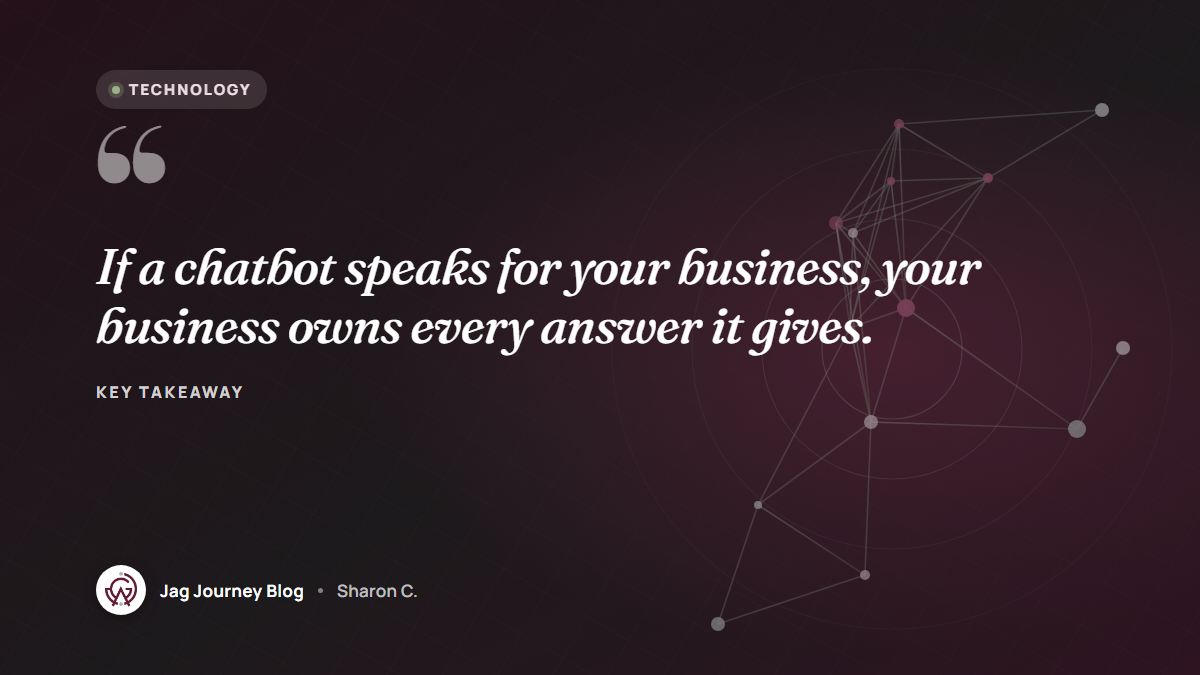
Businesses can be held responsible for what their chatbots say. In a widely reported 2024 decision, a Canadian tribunal held an airline responsible for incorrect refund information its website chatbot gave a customer. Whatever the legal details where you operate, the customer experience lesson is universal: the chatbot speaks for you.
Questions to decide whether you are ready
- Do you get many repetitive questions? If most questions are unique or complex, a chatbot may frustrate more than help.
- Do you already have good written answers? A chatbot is only as good as the content it draws from. If your FAQ is thin or outdated, fix that first.
- Who will maintain it? Policies and prices change. Someone must update the source content and review conversations.
- What happens when it cannot help? You need a clear, fast path to a person.
- What data will it handle? Collecting account or payment details through a chatbot raises privacy and security questions.
If the honest answers are "not many," "not really" and "nobody," a better FAQ page and a simple contact form may serve customers better today.
How to set one up responsibly
Ground answers in your own approved content
The safest approach limits the chatbot to answering from your own help articles, policies and FAQs, and links customers to the source page. When the answer is not in that content, it should say so and offer a handoff instead of guessing.
Make the human handoff easy
Offer a visible option to reach a person at any point, and route complaints, billing disputes, cancellations and sensitive topics directly to staff. Pass along the conversation so the customer does not have to repeat themselves.
Tell people they are talking to AI
Customers deserve to know whether they are chatting with a person or an automated system, and some places require that disclosure. A simple line at the start of the chat is enough.
Limit what it can do
Start with answering questions only. Be cautious about letting a chatbot take actions, like issuing refunds or changing accounts, until you understand how it behaves.
Protect customer data
Do not ask customers to share passwords, full card numbers or sensitive personal information in chat. Read the chatbot provider's data terms, including how conversations are stored and whether they are used for training.
Test, then keep reviewing
Before launch, test with real questions from your inbox, including tricky ones. After launch, read a sample of conversations every week, fix the source content when answers are wrong and track how often people ask for a human.
Put it in your AI policy
A customer-facing chatbot should be covered by your team's AI use policy: who owns it, what it may answer, how it discloses itself and how often it is reviewed. If you are new to how these tools generate answers, our explainer on how AI chatbots work will help you ask vendors better questions. And if you want a second opinion on your plans, contact us.
Frequently asked questions
Will an AI chatbot replace my customer service staff?
For most small businesses, a chatbot works best as a first line for routine questions, freeing staff for conversations that need judgment and care. Plan for people to remain central to service.
How do I stop a chatbot from making things up?
Limit it to answering from your approved content, instruct it to say when it does not know, provide a handoff to staff, and review conversations regularly. No setup eliminates errors entirely, so keep a person accountable.
Do I have to tell customers they are talking to a bot?
It is the honest approach and builds trust, and some laws require it in certain situations. A clear notice at the start of the conversation is a simple, good practice.
Related Posts

What AI Agents Are and How Much Access to Give Them
AI agents do more than answer questions. They can browse websites, fill in forms, send messages and change files. Here is how they work and how to decide what to let them touch.

Using AI-Generated Images in Your Business: Rights, Disclosure and Quality
AI image tools can produce a blog header or social graphic in seconds. Before you use one commercially, understand the ownership questions, the rules of the tool, and the checks that keep you honest.

How to Write an AI Use Policy for a Small Team
Your team is probably already using AI tools. A short, clear policy helps them do it well: which tools are approved, what information stays out, when a human must review, and when to disclose.

The 3-2-1 Backup Rule Explained With a Small Office Plan
The 3-2-1 rule is the simplest reliable backup strategy: three copies, two kinds of storage, one offsite. Here is what it means and a practical plan a small office or household can set up this week.

Using an AI Coding Assistant Wisely When You Are New to Code
AI coding assistants can explain errors, suggest code and even run tasks for you. Here is how beginners can use them as tutors rather than crutches, and the safety habits that matter from day one.
Comments (0)
No comments yet. Be the first to share your thoughts!