Turning Down Money That Does Not Fit Your Values

Every business owner eventually faces an offer that is hard to refuse. A large client wants work you are uneasy about. An investor offers money but expects changes you do not agree with. A sponsor wants to attach their name to your event, but their practices conflict with your mission. A contract would pay well but require constant weekend work.
The money is real, and you may need it. But some revenue costs far more than it pays.
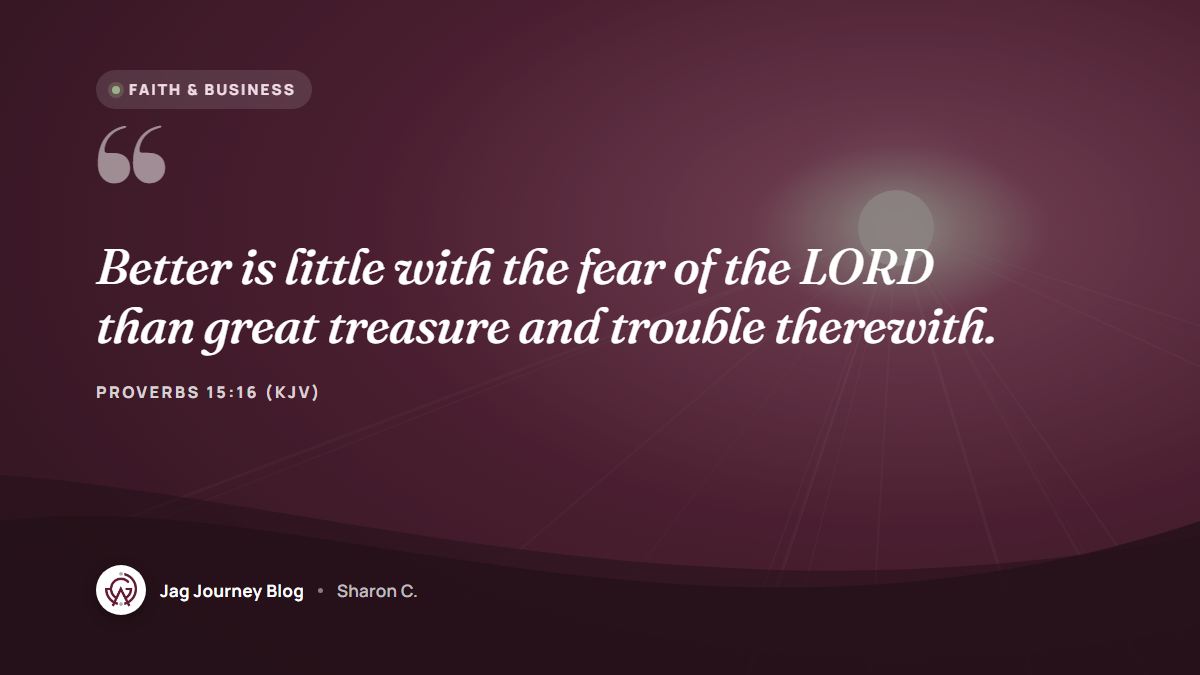
Better is little
Proverbs offers a perspective that runs against ordinary business logic: "Better is little with the fear of the LORD than great treasure and trouble therewith." (Proverbs 15:16, KJV). Another proverb says it even more directly: "Better is a little with righteousness than great revenues without right." (Proverbs 16:8, KJV).
These verses do not say that more money is bad. They say that money gained at the cost of righteousness, peace or reverence for God is a poor trade.
When money does not fit
Here are some common situations where faith-driven owners may need to consider saying no.
Work that requires dishonesty
A client asks you to write misleading marketing, hide information from customers or bend rules. No amount of revenue justifies participating in deception.
Clients whose purpose conflicts with your values
Some work may be legal but conflict with your convictions or mission. This requires discernment. Not every client must share your faith. Serving people with different beliefs is part of loving your neighbor. The question is whether the work itself would require you to promote or participate in something you believe is wrong.
Investors or partners who want control of your values
Outside money often comes with expectations. If an investor or partner would push you to compromise integrity, rest, how you treat people or your mission, the cost may be too high.
Deals that harm your people
A contract that would overwhelm your team, force constant overtime or require unsafe shortcuts may not be worth it.
Revenue that pulls you off mission
Some opportunities are not wrong but would steadily pull the business away from its purpose. See guarding against mission drift.
Set fit criteria in advance
Decisions about money are hard to make in the moment, especially when cash is tight. Write down your criteria ahead of time. For example:
- We do not do work that requires misleading anyone.
- We do not accept clients who mistreat our staff.
- We do not accept funding that requires changing our core values.
- We do not take on work that requires us to give up our weekly day of rest, except in rare, agreed emergencies.
- We prioritize clients whose needs fit our mission and strengths.
When an offer comes, compare it to your criteria rather than deciding purely on the dollar amount.
Weigh gray areas carefully
Many decisions are not clear-cut. When you are unsure:
- Pray and give yourself time.
- Ask counsel from people who know your values. See building a circle of wise counsel.
- Consider the precedent. What would saying yes here mean for future decisions?
- Count the full cost, including the effect on your team, conscience and reputation.
Decline graciously
When you say no, do it kindly and honestly. You do not need to lecture or explain every reason. Something simple works:
"Thank you for considering us. After thinking it over, we do not believe we are the right fit for this project. I hope you find the right partner."
If appropriate, refer them to someone who may be a better fit.
Trust God with the gap
Turning down money can be frightening, especially when the business needs it. This is where faith becomes practical. Scripture does not promise that turning down misaligned revenue will be rewarded with more. It does promise God's presence and that integrity is never wasted. Freeing capacity for the right work can sometimes open doors you could not have predicted, though that is not guaranteed.
Frequently asked questions
Is it wrong to serve clients who do not share my faith?
No. Serving people of all beliefs is part of loving your neighbor. The question is whether a specific project would require you to act against your convictions, not whether the client shares them.
What if I cannot afford to turn down this money?
Look honestly at your situation, seek counsel and consider whether there are compromises that do not violate your values. If a deal would require real wrongdoing, look for other ways to address the financial need.
How do I explain my decision to my team?
Be honest about your reasons in a way that connects to your shared values. Most teams respect leaders who make costly decisions for the right reasons.
Related Posts

Counting the Cost Before You Launch Something New
A new product, service or location can energize a business or quietly drain it. This cost worksheet covers money, time, people, existing customers and your household, plus stop rules set in advance.

Earning Donor Trust: Financial Transparency for Ministries and Nonprofits
Donors give out of trust. Paul took care that money he handled was honest in the sight of God and people. Here is how ministries and nonprofits can practice financial transparency that earns that trust.

Choosing a Business Partner: Questions to Ask Before You Sign
A business partnership is a lot like a marriage, and it deserves the same care before you commit. Here are the questions to ask about vision, values, money, roles, conflict and exits.

How Big Is Big Enough? Defining Enough for Your Business
Without a clear sense of enough, growth becomes an endless treadmill. Here is a worksheet for defining enough income, size and hours for your business, plus a plan for what happens beyond enough.
Thinking Biblically About Business Debt
Scripture does not forbid all borrowing, but it treats debt seriously. Here is a balanced look at what the Bible says and seven questions to ask before your business takes on a loan.
Comments (0)
No comments yet. Be the first to share your thoughts!