Counting the Cost Before You Launch Something New

Your business is steady, and an idea for something new will not leave you alone. A second location. A new product line. An online course. A service your customers keep asking for. The energy is real, and some of these ideas will be exactly right.
But new initiatives have a way of costing more than they appear to on day one. They consume money, attention and people in ways that only show up months later. This post offers a practical way to count the full cost before you begin.
The unfinished tower
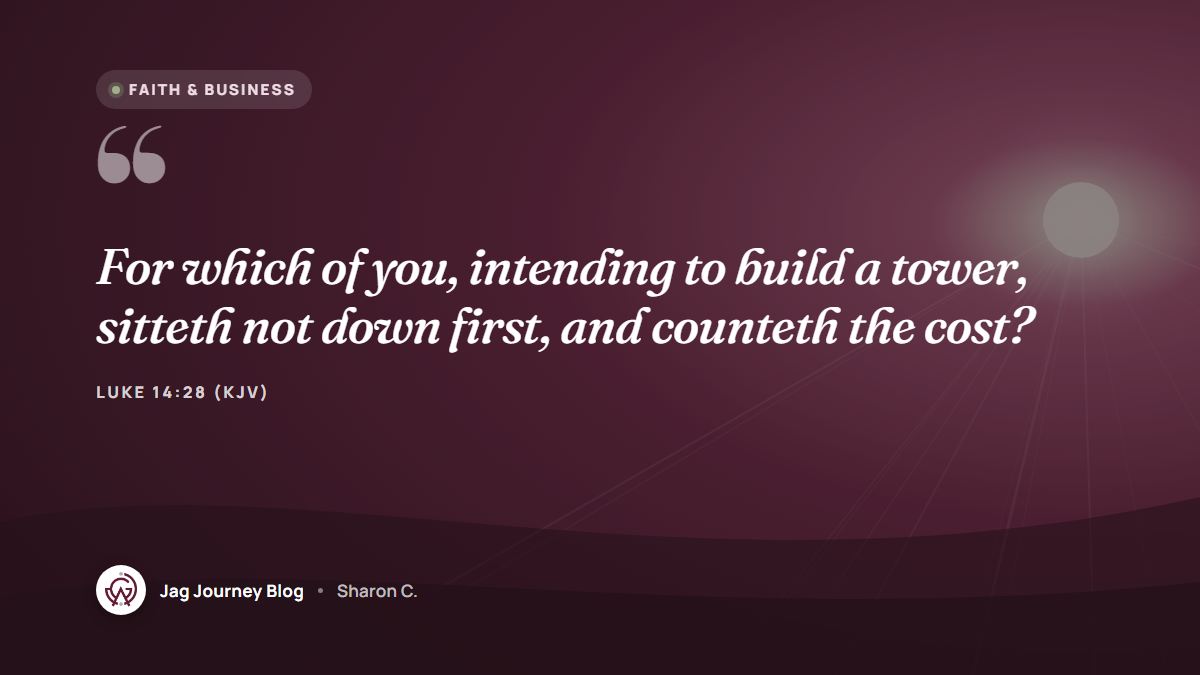
Jesus used an image his listeners would have understood: "For which of you, intending to build a tower, sitteth not down first, and counteth the cost, whether he have sufficient to finish it?" (Luke 14:28, KJV). He went on to describe the embarrassment of laying a foundation and being unable to finish, so that everyone passing by mocks the half-built tower.
In context, Jesus was talking about the cost of following him. He wanted people to understand what discipleship would require. But the principle he drew on was ordinary wisdom his listeners already accepted: before you build, count what it will take to finish.
Many businesses have half-built towers: a product that never quite launched, a location that drained the original store, a program that started strong and fizzled. Counting the cost does not guarantee success, but it makes those unfinished projects much less likely.
The full cost worksheet
Sit down with a notebook or a simple document and work through each category. Be honest. The goal is not to talk yourself out of the idea. It is to see it clearly.
1. Money
- Startup costs. Equipment, inventory, build-out, software, legal and licensing fees, and marketing to launch.
- Ongoing costs. Monthly expenses the new initiative will add, including staff time.
- Time to break even. How many months before the initiative pays for itself? Be realistic and add a margin.
- Funding source. Will this come from savings, current profits or debt? What happens to your reserves?
2. Your time and attention
- How many hours per week will this take from you, especially in the first six months?
- What will you stop doing, or do less of, to make room?
- Who will watch the core business while your attention is elsewhere?
3. Your people
- Will current employees take on new work? Are they willing and trained?
- Will you need to hire? How long will it take to find the right people?
- How will the change affect morale and workload?
4. Your existing customers
- Could this initiative distract you from serving current customers well?
- Could it confuse your brand or what you are known for?
- Will current customers benefit, or only new ones?
5. Your household and soul
- How will this affect your family, your rest and your health?
- Does this fit your sense of calling, or is it mainly driven by restlessness or comparison?
- Have you prayed about it, and what do your trusted counselors think?
Define what finished looks like
The tower in Jesus's illustration had a clear end point. Many business initiatives do not. Before you start, write a short description of what success looks like at six and twelve months. Be specific: a certain number of customers, a certain monthly revenue, a process that runs without you, a team member trained to lead it.
This gives you something to measure against, rather than a vague sense that things are going well or poorly.
Set your stop rules in advance
One of the most useful things you can do is decide, before you begin, what would cause you to pause or stop. For example:
- If we have spent this much and have not reached a certain number of customers, we pause and reassess.
- If the core business's sales drop by a set percentage while we launch, we scale back.
- If this requires more than a certain number of my hours per week for more than three months, we change the plan.
Stop rules are much easier to set calmly at the start than to invent under pressure halfway through. They protect you from pouring more and more into a tower you cannot finish.
Start with a pilot when you can
Whenever possible, test the idea small before committing fully. Offer the new service to a handful of existing customers. Run a pop-up before signing a lease. Sell a limited batch before ordering a full production run. A pilot gives you real numbers to replace estimates.
Bring it to prayer and counsel
Counting the cost is not only a spreadsheet exercise. Bring your completed worksheet into prayer, and share it with people who will be honest with you. Our posts on praying through a business decision and building a circle of wise counsel walk through both. If you are thinking about funding the expansion with a loan, take extra time and talk with a qualified professional.
Frequently asked questions
How do I estimate costs for something I have never done before?
Talk to people who have done something similar, get quotes rather than guessing, and add a meaningful contingency. Unfamiliar projects almost always cost more and take longer than first estimates suggest.
Does counting the cost mean I lack faith?
No. Jesus himself used counting the cost as an example of wisdom. Careful planning and trust in God work together; faith does not require ignoring what a project will take.
What if the cost is high but I still believe the idea is right?
Then you can move forward with open eyes, a realistic budget, clear stop rules and the support of people you trust. A high cost is not automatically a no. An uncounted cost is the real danger.
Related Posts

How Big Is Big Enough? Defining Enough for Your Business
Without a clear sense of enough, growth becomes an endless treadmill. Here is a worksheet for defining enough income, size and hours for your business, plus a plan for what happens beyond enough.
Choosing a Business Partner: Questions to Ask Before You Sign
A business partnership is a lot like a marriage, and it deserves the same care before you commit. Here are the questions to ask about vision, values, money, roles, conflict and exits.
Thinking Biblically About Business Debt
Scripture does not forbid all borrowing, but it treats debt seriously. Here is a balanced look at what the Bible says and seven questions to ask before your business takes on a loan.

Earning Donor Trust: Financial Transparency for Ministries and Nonprofits
Donors give out of trust. Paul took care that money he handled was honest in the sight of God and people. Here is how ministries and nonprofits can practice financial transparency that earns that trust.

Building a Business With Legacy in Mind
A business legacy is more than money left behind. Here is how to think about the people you develop, the reputation you build and the practical plans that let your work outlast you.
Comments (0)
No comments yet. Be the first to share your thoughts!