Tired of Your Job, or Tired in It? Sorting Out What Needs to Change

You drag yourself to work on Monday. By Wednesday you are counting hours. By Friday you are wondering whether it is time to start looking for something else. Feeling worn out at work is common, but the right response depends on a question many people skip: are you tired of your job, or tired in it?
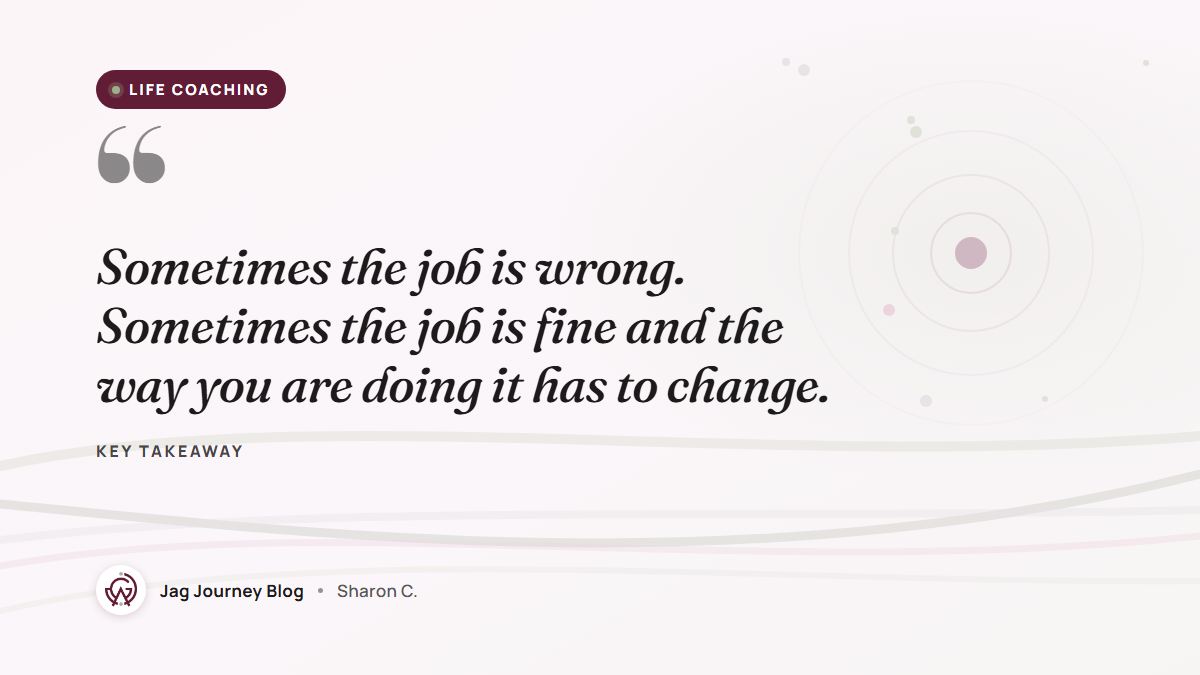
Being tired of your job means the work itself no longer fits. Being tired in your job means the work might be fine, but something about how you are doing it, or what surrounds it, is draining you. This post will help you tell the difference before making a big decision.
Two kinds of tired
Tired in your job often comes from things that can change without leaving: too many hours, unclear expectations, a difficult project, a stressful season, poor boundaries, too little rest or a single hard relationship at work.
Tired of your job often comes from a deeper mismatch: the work no longer connects to what you value, you have stopped growing, your strengths are not being used or your life has changed in ways the role cannot accommodate.
Both are real. But they call for different solutions. Changing jobs to fix "tired in" can lead to the same exhaustion in a new place. Staying put to fix "tired of" can leave you stuck for years.
Signs you may be tired in your job
- You still believe in the work, but you are overwhelmed by the volume.
- The exhaustion started with a specific change, such as a new manager, a staffing shortage or a reorganization.
- You enjoy parts of your role but feel buried by tasks that are not your strengths.
- You rarely take breaks, vacations or evenings off.
- You feel better after a real rest, at least for a while.
Signs you may be tired of your job
- You feel little connection to the purpose of the work, even on good days.
- You have felt this way for a long time across different projects and managers.
- You have stopped learning or growing, and see no path to change that.
- You dread the core tasks, not just the extra ones.
- Rest helps your body, but your heart still feels disconnected from the work.
You may recognize yourself in both lists. That is common, and it helps to sort which parts are which.
The drains and gains audit
For two weeks, keep a simple log at the end of each workday. It takes about five minutes.
- Draw two columns: Drains and Gains.
- Under Drains, list the tasks, meetings, people or moments that left you more tired or frustrated.
- Under Gains, list the ones that gave you energy, satisfaction or a sense of meaning.
- Rate your overall day from 1 to 5.
At the end of two weeks, review your log and ask:
- What drains show up most often?
- Are the drains mostly about the core work or about things around it?
- What gains show up most often? Could I do more of those here?
- Were there good days? What made them good?
This audit turns a vague sense of "I hate my job" into specific information you can act on.
Fixable or structural?
Look at your top drains and sort each one:
- Fixable: Could change with a conversation, a boundary, a new system or a different schedule. Examples: too many meetings, unclear priorities, constant after-hours messages, a task that could be delegated.
- Structural: Built into the role or the organization in a way that is unlikely to change. Examples: the core work does not fit your strengths, the company's values clash with yours, the industry is shrinking.
If most drains are fixable, start there. If most are structural, it may be time to plan a change. Thinking About a Career Change? Questions to Ask First can help you think it through.
Changes to try before you leave
If your audit points to "tired in," here are changes worth trying for a month or two:
- Talk with your manager about workload, priorities or a role adjustment. Bring specific examples from your audit.
- Set boundaries around your hours and availability. Work-From-Home Boundaries That Protect Your Evenings includes ideas that apply in any workplace.
- Use your vacation time and other leave.
- Ask for more of your gains. If mentoring energizes you, ask to train new staff.
- Protect your energy. Map Your Energy, Not Just Your Calendar can help you plan your day around your best hours.
Give the changes enough time to work. If things improve, you may have saved yourself an unnecessary job search. If they do not, you will leave with more clarity about what you need next.
When exhaustion is about health
Sometimes deep exhaustion is not mainly about your job. Ongoing fatigue, sleep problems, low mood or physical symptoms can have medical or emotional causes. If you feel exhausted most of the time, please talk with your doctor. If you feel hopeless or unable to cope, reach out to a licensed counselor, and in the US you can call or text 988 at any time.
Frequently asked questions
How do I know if I should quit my job?
Track what drains and energizes you for a couple of weeks. If the drains are mostly built into the role and do not improve after you try reasonable changes, it may be time to plan a move.
Can a vacation fix job burnout?
Rest helps, but if exhaustion returns quickly after time off, the cause is likely in your workload, boundaries or the role itself. Look for patterns and address the source.
What should I say to my manager if I am overwhelmed?
Bring specific examples of your workload, explain the impact and propose a change, such as shifting priorities or delegating a task. A concrete request is easier to act on than a general complaint.
Related Posts

Thinking About a Career Change? Questions to Ask First
Before you leave a job or field, a few honest questions can save you from trading one frustration for another. Use this question set to think through a career change.

Coach, Counselor or Therapist: Which Kind of Help Do You Need?
Coaching, counseling and therapy can all help, but they are not the same. Learn what each one does, when licensed care should come first and how to choose wisely.

Learning Something New as an Adult Beginner
Learning a new skill as an adult can feel awkward, especially when you are used to being competent. Learn how to embrace being a beginner and build a simple 30-day learning plan.

What to Do in the First Week After a Big Setback
When something big goes wrong, the first days can feel like a blur. Here is a gentle day-by-day guide for the first week after a setback, with a simple three-column exercise.

Handling Rejection Without Making It Your Identity
Rejection stings, whether it is a job, a relationship or a creative project. Learn to separate the event from your identity and use a simple reframe card to keep going.
Comments (0)
No comments yet. Be the first to share your thoughts!