Contentment When You Still Want More
You want a bigger home for your growing family. You hope for a promotion. You dream of starting a business, writing a book or taking a trip you have saved for. At the same time, you have heard that contentment is a virtue, and you wonder: does wanting more mean I am not content? Should I stop dreaming?
Contentment and ambition are often presented as opposites. They do not have to be. This post explores how you can be genuinely content with your life today while still working toward something more.
Contentment is not the same as settling
Contentment is sometimes misunderstood as giving up on growth. It is not. Contentment is a settled peace that does not depend on getting the next thing. You can be content and still set goals. The difference is in how you hold them.
Discontent says, "I can't be happy until I have this."
Contentment says, "I am at peace now, and I'm also working toward this."
The first makes your peace hostage to the future. The second lets you enjoy today while still hoping for tomorrow.
Signs discontent is running the show
Discontent often hides. A few signs it may be driving you:
- You feel restless or irritated even when things are going well.
- You rarely enjoy what you have because you are focused on what is next.
- You compare your life to others often and come up short.
- You believe a specific purchase, job or milestone will finally make you happy.
- Once you reach a goal, the satisfaction fades quickly and a new want takes its place.
- Advertising, social media or certain conversations leave you feeling that your life is not enough.
Noticing these patterns is a helpful first step.
Contentment is learned
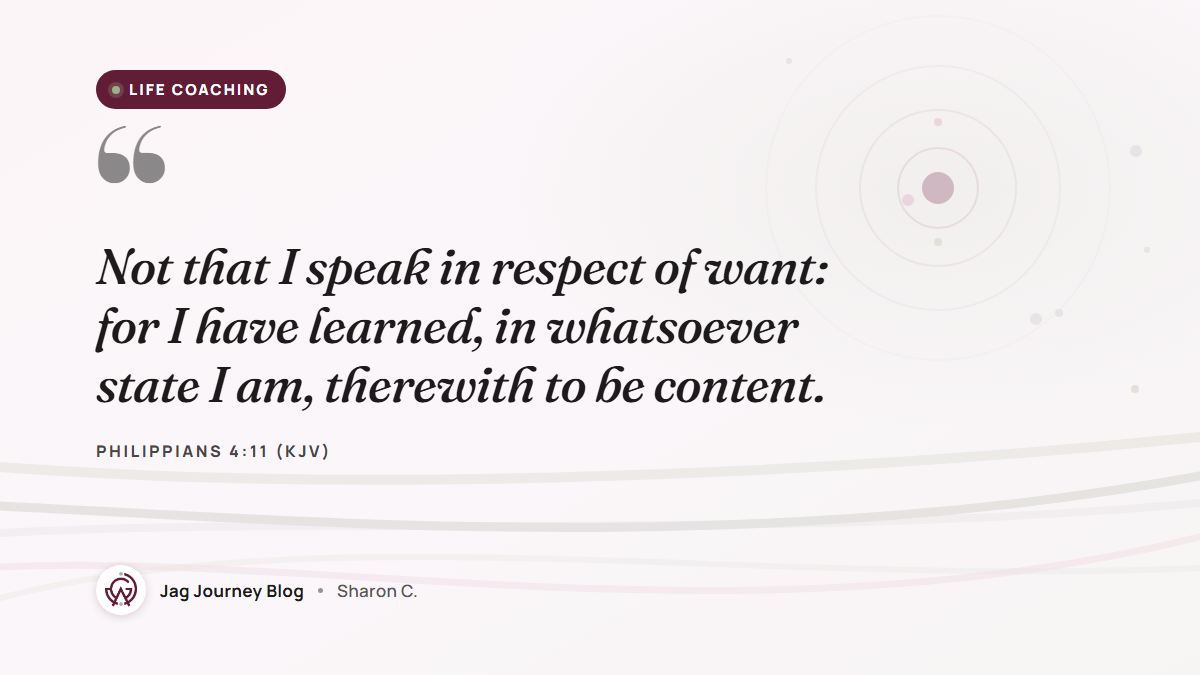
The verse above was written by the apostle Paul, who had experienced both plenty and hunger, freedom and prison. Notice that he says he "learned" contentment. It did not come naturally. It was a skill developed over time.
That is encouraging. If contentment is learned, it can be practiced. You do not have to feel content naturally to grow in it. Scripture also connects contentment with trust, reminding believers to be content with what they have, because God has promised never to leave or forsake them (Hebrews 13:5).
Contentment is not a promise that you will always have plenty. It is a peace that holds whether you have much or little.
The enough list
This exercise helps you notice what is already enough in your life. Take fifteen minutes.
- Draw a line down the middle of a page. Label one side "Enough" and the other "Still hoping for."
- On the "Enough" side, list things in your life that are sufficient right now. Not perfect, just enough. A home that keeps you safe and dry. Food for this week. A few good friends. Work that pays the bills. A church community. Health to get through today.
- On the "Still hoping for" side, list the things you want or are working toward.
- Read the "Enough" side slowly. Thank God for each item, or simply pause and appreciate it.
- Look at the "Still hoping for" side and ask: Which of these are healthy goals? Which are driven by comparison or fear? Which can I hold more loosely?
Many people find that the "Enough" list is longer than they expected.
Want with open hands
You can hold your hopes and goals with open hands. That means:
- Working toward them with effort and care
- Enjoying the process, not just the outcome
- Accepting that some may not happen, or may happen differently
- Not tying your worth or happiness to any single result
- Staying grateful for what you have along the way
Open hands make room for both ambition and peace. If you are setting new goals, Setting a Goal You Will Still Care About in Three Months can help you make sure they are truly yours.
Guard against discontent triggers
Some things reliably stir up discontent. Notice yours and limit them when you can:
- Scrolling. Social media often shows the best moments of other people's lives.
- Advertising. Ads are designed to make you feel you need something.
- Certain conversations. Some friendships or settings revolve around comparison.
- Shopping as a pastime. Browsing can create wants that were not there before.
You do not have to avoid all of these completely. Just notice how they affect you and make choices that protect your peace. How to Stop Comparing Your Life to Everyone Else's offers more help with comparison.
Frequently asked questions
Can I be content and still have goals?
Yes. Contentment is a settled peace that does not depend on reaching the next goal. You can work toward meaningful goals while appreciating your life as it is today.
How do I become more content?
Practice gratitude for what is already enough, limit things that stir up comparison and discontent and hold your goals with open hands rather than making your happiness depend on them.
Is wanting more always a bad thing?
No. Wanting to grow, improve or build something good can be healthy. It becomes a problem when it keeps you from enjoying today or ties your worth to getting more.
Related Posts
How to Celebrate Small Wins So You Keep Going
Waiting for the finish line to celebrate can drain your motivation. Learn simple ways to notice and celebrate small wins, plus a done list you can start tonight.
How to Break a Habit by Changing What Happens Before It
Most unwanted habits start with a cue you barely notice. Learn how to map the cue, routine and payoff behind a habit, then change what happens before it begins.
Gratitude in a Hard Season Without Faking Happiness
Gratitude does not require pretending everything is fine. Learn how to hold honest lament and real thankfulness together, with a simple two-line practice for hard days.
The Handwritten Thank-You Note: A Small Habit With Reach
A short handwritten note can mean more than you might expect. Learn a simple structure for heartfelt thank-you notes, who to thank and how to make writing them a habit.

Learning Something New as an Adult Beginner
Learning a new skill as an adult can feel awkward, especially when you are used to being competent. Learn how to embrace being a beginner and build a simple 30-day learning plan.
Comments (0)
No comments yet. Be the first to share your thoughts!