Owner or Steward? How One Word Changes Daily Business Decisions
On paper, you own your business. Your name is on the registration, the bank account and the lease. You take the risk and you answer for the results. All of that is true, and it is also incomplete.
Scripture describes a different relationship to the things in our care. Psalm 24:1 reminds us that the earth and everything in it belongs to the Lord. If that is so, then your business, your skills, your customers' trust and even your hours are on loan. You are not the final owner. You are a steward.
That one word can change ordinary Tuesday decisions more than you might expect.
What a steward actually is
In the New Testament, the word often translated steward describes a household manager. This was a person trusted with the master's property, servants and accounts. A good steward was not passive. He made decisions, managed money, hired help and planned ahead. The difference was that he did it on someone else's behalf and knew he would give an account.
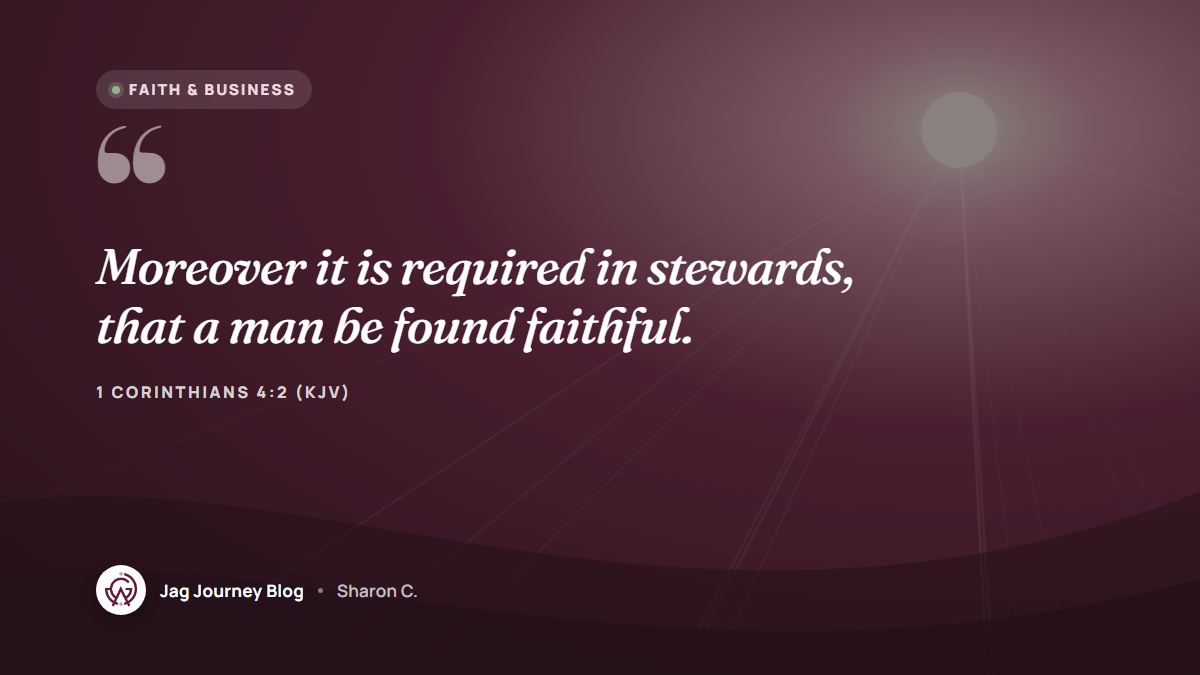
Paul puts the standard plainly: "Moreover it is required in stewards, that a man be found faithful." (1 Corinthians 4:2, KJV). Notice what is missing from that sentence. It does not say stewards must be impressive, fast-growing or famous. It says faithful.
For a business owner, that is freeing. Your job is not to guarantee a particular outcome. Your job is to manage well what has been placed in your hands.
Five steward questions for everyday decisions
An owner mindset tends to ask, "What do I want?" A steward mindset asks, "What would faithful management look like here?" These five questions put that into practice.
1. Whose interests am I serving with this decision?
Before a major purchase, a policy change or a new hire, ask who benefits. A steward considers the business's health, the people who work there, the customers it serves and the household that depends on it. Your own interests count. They are just not the only ones on the list.
2. Would I be comfortable explaining this to the One I answer to?
This is not a threat. It is a clarity test. Imagine walking through the decision line by line with someone who loves you and sees everything. Pricing that relies on confusing fine print, or a corner you hope nobody notices, rarely survives that conversation.
3. Am I using what I have before asking for more?
Stewards tend to resources already in hand. Before you buy new software, are you using the tools you pay for? Before you hire, is the current team's time being wasted on avoidable rework? Faithfulness with what you have is often the best preparation for more.
4. What will this look like in five years?
Owners can chase this quarter. Stewards think about what they will hand to the next season, or the next person. A shortcut that saves money now but erodes trust is poor management, even if it looks good on this month's report.
5. Am I treating my own life as entrusted too?
Your health, your family and your relationship with God are part of what you steward. Running yourself into the ground is not faithful management of a business. It is mismanagement of the person the business depends on. Our guide to a practical Sabbath for business owners is a good place to start if this question stings.
What changes when you think like a steward
The shift is quiet but real. Here is how it often shows up:
- Spending. You still invest, but you ask whether each expense serves the mission rather than your image.
- Pricing. You charge fairly, neither apologizing for your work nor squeezing customers who trust you. We explore this in pricing your work honestly.
- People. Employees and contractors become people you are responsible for, not just line items.
- Customers. Their data, their money and their time are things you are trusted with, so you guard them carefully.
- Results. A bad month is painful, but it does not define your worth. A good month is a gift to manage, not a trophy.
Stewardship is not passivity
Some people hear "it all belongs to God" and conclude they should not plan, compete or grow. That is not the picture Scripture gives. The faithful servants in Jesus's parable of the talents put their master's money to work. Stewards take initiative. They take reasonable risks. They make hard calls.
The difference is posture. A steward holds plans firmly enough to act on them and loosely enough to release them. A steward works hard without believing everything depends on his or her effort alone.
One practice for this week
Pick one recurring decision you make, such as approving purchases, setting a price or scheduling your week. For the next seven days, pause before that decision and ask the five questions above. Write a sentence about what you notice. At the end of the week, look for patterns. You may find one area where you have been acting like a nervous owner when you could have been a calm and faithful steward.
Frequently asked questions
Does stewardship mean I should not want my business to make a profit?
No. Profit is how a business stays healthy enough to serve customers, pay people and give generously. Stewardship asks how profit is earned and what it is used for, not whether it is allowed.
How is stewardship different from good management?
The practices overlap a great deal. The difference is the reason behind them: a steward manages carefully because the resources are entrusted by God, which adds accountability, humility and freedom from having to control every outcome.
What should I do if I realize I have been managing poorly?
Start where you are. Confess it to God, make one concrete change this week, and ask someone you trust to check in with you. Faithfulness is built in small, repeated steps.
Related Posts
Thinking Biblically About Business Debt
Scripture does not forbid all borrowing, but it treats debt seriously. Here is a balanced look at what the Bible says and seven questions to ask before your business takes on a loan.

Building a Circle of Wise Counsel for Your Business
Solo owners often make big decisions alone. Here is how to choose three to five trusted counselors, ask them for help well, receive hard feedback and keep the relationships healthy.

Building a Business With Legacy in Mind
A business legacy is more than money left behind. Here is how to think about the people you develop, the reputation you build and the practical plans that let your work outlast you.
Choosing a Business Partner: Questions to Ask Before You Sign
A business partnership is a lot like a marriage, and it deserves the same care before you commit. Here are the questions to ask about vision, values, money, roles, conflict and exits.
Anxiety and the Business Owner: Casting Cares While Still Doing the Work
Owning a business brings a steady stream of worries. Here is a practical way to sort your worries into actions and prayers, care for your body and mind, and know when to get professional help.
Comments (0)
No comments yet. Be the first to share your thoughts!