Forgiveness at Work Without Pretending Nothing Happened

Workplaces are full of people, and people hurt each other. A coworker takes credit for your idea. An employee lies about a mistake. A business partner breaks an agreement. A manager speaks to you with contempt in front of others. These wounds can linger for years, shaping how you work and who you trust.
For followers of Jesus, forgiveness is not optional. But many believers are confused about what forgiveness requires at work. Does it mean acting as if nothing happened? Restoring full trust right away? Dropping all consequences? This post untangles those questions.
The call to forgive
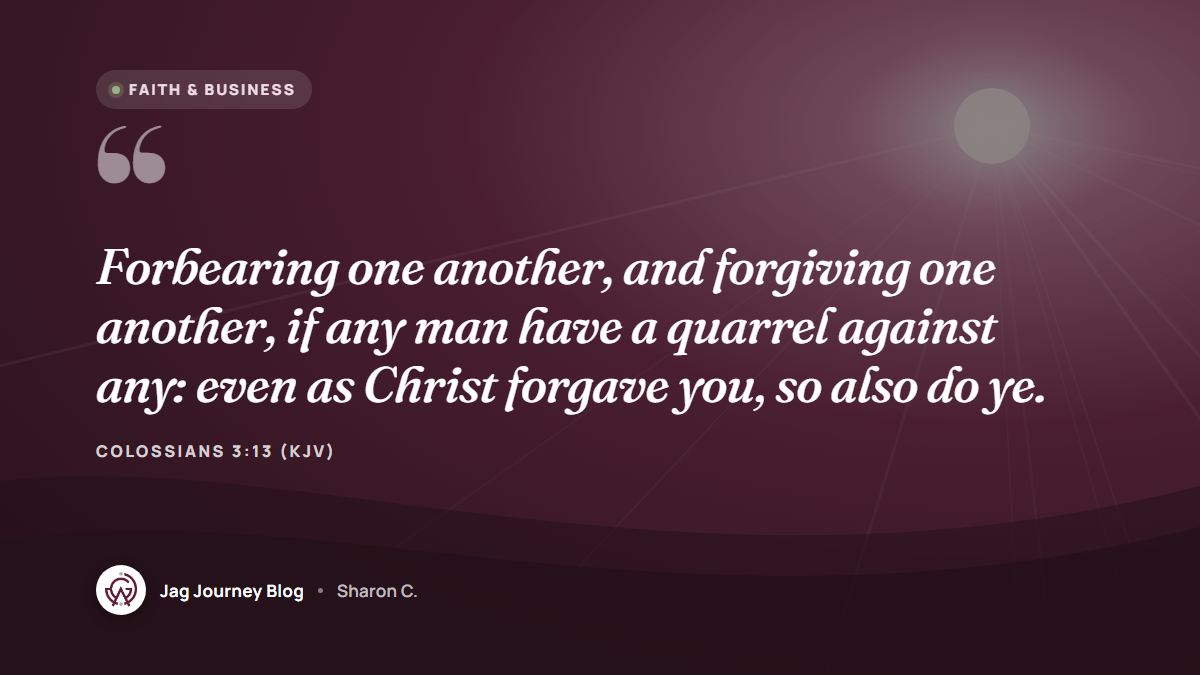
Paul writes to the Colossians: "Forbearing one another, and forgiving one another, if any man have a quarrel against any: even as Christ forgave you, so also do ye." (Colossians 3:13, KJV). Our forgiveness of others flows from the forgiveness we have received. When Peter asked how many times he should forgive, Jesus answered with a number meant to be beyond counting: seventy times seven (Matthew 18:21-22).
Forgiveness is serious. It is also more specific than many people realize.
Four things that are often confused
It helps to separate four different ideas.
Forgiveness
Forgiveness is releasing your right to take revenge and choosing not to hold the offense against the person. It happens primarily between you and God, and it can happen even if the other person never apologizes. It is often a process rather than a single moment, especially for deep hurts.
Trust
Trust is confidence that someone will act reliably in the future. Forgiveness can be given freely; trust must be rebuilt through evidence. You can fully forgive an employee who stole from you and still not give them access to the cash drawer.
Consequences
Forgiveness does not erase consequences. A business may still need to discipline, demote or let someone go, recover losses or report illegal activity. Holding someone accountable is not the same as holding a grudge.
Reconciliation
Reconciliation is the restoration of a relationship. It requires both people. It usually involves acknowledgment of the wrong, a change in behavior and time. Sometimes reconciliation is possible and beautiful. Sometimes, for safety or other reasons, it is not wise. Forgiveness is still possible even when reconciliation is not.
Forgiveness is not tolerating harm
Forgiving someone does not mean accepting ongoing mistreatment. If someone is harassing, threatening or abusing others, forgiveness does not require you to stay silent or remain in harm's way. Report it through appropriate channels, protect yourself and others, and seek help. Forgiveness and justice are not enemies.
What forgiveness looks like at work
When you have been wronged at work, forgiveness might look like:
- Acknowledging the hurt honestly, to yourself and to God, rather than pretending it did not matter.
- Choosing not to retaliate, gossip or undermine the person.
- Praying for them, even when it feels difficult.
- Treating them with basic respect in daily interactions.
- Letting trust be rebuilt step by step as their behavior shows change.
- Releasing the urge to replay the offense every time you see them.
If you are the leader and the offense affects the business, forgiveness can coexist with a clear response. You might have an honest conversation, set expectations, adjust responsibilities, and still choose not to hold a personal grudge. Our post on resolving workplace conflict offers practical steps for those conversations.
When you are the one who needs forgiveness
Sometimes you are not the one who was wronged. You are the one who did the harm. In that case, the path is simpler but not easier: acknowledge what you did specifically, apologize without excuses, make it right where you can, and change your behavior. Then accept that the other person may need time. Ask; do not demand.
A forgiveness practice for this week
If there is someone at work you are struggling to forgive, try this simple practice over the next seven days.
- Write down what happened and how it affected you. Be honest. Do not minimize it.
- Separate the four ideas. Next to your description, note what forgiveness would mean, what trust is reasonable right now, what consequences are appropriate and whether reconciliation seems possible.
- Pray about it daily. Tell God how you feel. Ask for help to release the desire for revenge.
- Choose one small act of respect toward the person this week, such as a courteous greeting or fair treatment in a meeting.
- Decide whether a conversation is needed. If so, plan it using the steps in speaking the truth in love.
- Notice any change in how you feel by the end of the week.
Forgiveness for deep wounds rarely happens in a week. That is all right. You may need to choose it again and again. If an offense at work has left you struggling with anger, anxiety or sleep over a long period, consider talking with a pastor or licensed counselor. You do not have to carry it alone, and choosing to forgive is a step of faith even when your feelings have not caught up yet.
Related Posts

Celebrating Wins Without Pride
Success is worth celebrating, but it can also feed pride. Here is a simple way to celebrate business wins with gratitude to God, generous credit to others and an honest look at what made them possible.

Building a Culture of Encouragement on Your Team
Many teams hear about problems far more often than about what is going well. Here is how to build a culture of specific, sincere encouragement that lifts people without flattery.

Building a Business With Legacy in Mind
A business legacy is more than money left behind. Here is how to think about the people you develop, the reputation you build and the practical plans that let your work outlast you.

Building a Circle of Wise Counsel for Your Business
Solo owners often make big decisions alone. Here is how to choose three to five trusted counselors, ask them for help well, receive hard feedback and keep the relationships healthy.

Deborah's Leadership: Wisdom, Counsel and Shared Credit
Deborah offered wise judgment, gave clear direction, showed courage under pressure and celebrated others in her song of victory. Here are leadership lessons from her story for women leading at work.
Comments (0)
No comments yet. Be the first to share your thoughts!