Arrange Your Home So Good Habits Are the Easy Choice

We like to think our habits come down to willpower. In reality, many of our daily choices are shaped by what is in front of us. The snack on the counter gets eaten. The guitar in the closet gets ignored. The phone on the nightstand gets checked at 2 a.m.
The good news is that you can rearrange your surroundings so your home quietly supports the habits you want. This post shows you how, with a one-room audit you can finish in under an hour.
Your rooms are already shaping your habits
Walk into your kitchen and notice what you see first. Walk into your living room and notice where the furniture points. Look at your nightstand. Each space has default behaviors built in.
If the couch faces the television and the remote sits on the armrest, the room is designed for watching TV. If the Bible is on a high shelf behind three other books, the room is not designed for reading it. None of this is a moral failing. It is simply how environments work. They make some actions easy and others harder.
Once you see that, you can start designing on purpose.
Make good habits visible and easy
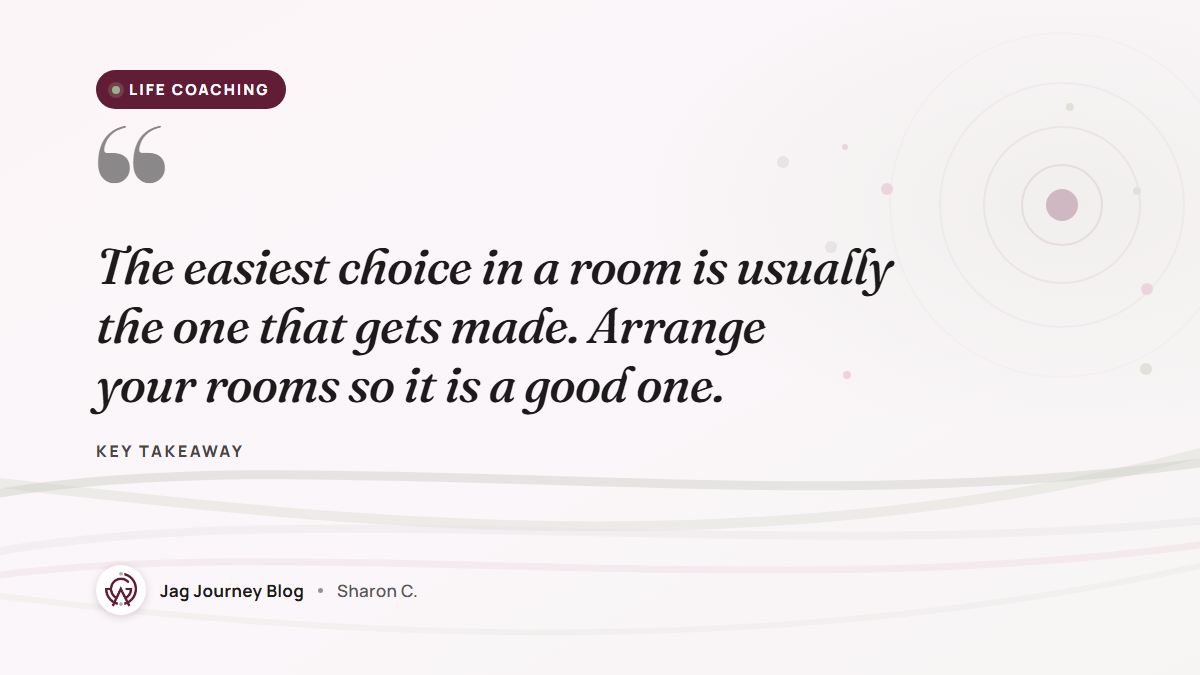
The simplest principle: put what you want to do where you will see it, within easy reach.
- Visible. A fruit bowl on the counter, a journal on your pillow, a water bottle on your desk, a book on the coffee table. What you see often becomes what you do.
- Ready. Set things up so the habit can start in seconds. Yoga mat already unrolled. Walking shoes by the door. Guitar on a stand instead of in its case.
- Close. Store the tools for good habits near where the habit happens. Keep a Bible and pen at the kitchen table if that is where you sit with your coffee.
The goal is to remove small barriers. Many habits fail not because they are hard, but because getting started takes three extra steps.
Make unwanted habits less convenient
Now flip the principle. For habits you want to reduce, add a little distance or effort.
- Move the candy dish into a cabinet, or stop buying the snacks you overeat.
- Charge your phone outside the bedroom.
- Unplug the gaming console after use and store the controllers in a drawer.
- Put the TV remote in a basket across the room.
- Keep the credit card out of your wallet if online shopping is a struggle.
You are not banning anything. You are simply adding enough friction that you have a moment to choose rather than drift.
The one-room audit
Pick one room that matters most for the habit you are working on. Then walk through these steps.
- Stand in the doorway and notice. What draws your eye first? What is easiest to reach? What does the room seem built for?
- Name your goal for the room. For example, "I want the living room to be a place for conversation and reading, not only television."
- List what supports that goal. A comfortable chair, good lighting, books within reach.
- List what works against it. The TV as the focal point, phone chargers by every seat, piles of clutter on the reading chair.
- Make three changes. Choose three small adjustments you can make today. Move one item, add one item and remove one item.
- Live with it for a week. Notice whether your behavior in the room shifts. Adjust as needed.
Three changes in one room is enough. Trying to redesign the whole house at once usually leads to a weekend of effort and little lasting change.
Room-by-room ideas
Here are a few starting points:
Kitchen
- Keep washed fruit and vegetables at eye level in the fridge.
- Put a filled water pitcher in front.
- Store treats in opaque containers on higher shelves.
Living room
- Turn a chair away from the TV and toward a window or another chair.
- Add a basket of books or board games within reach.
- Create a charging station away from the seating area.
Bedroom
- Keep the nightstand simple: a lamp, a book, a journal.
- Use an alarm clock instead of your phone.
- Lay out tomorrow's clothes before bed.
Entryway
- Hang keys and bags in one consistent place.
- Keep walking shoes and a jacket ready to grab.
Workspace
- Keep only what you need for the current task on your desk.
- Put your phone in a drawer during focus time.
- Keep a notepad for capturing stray thoughts so you do not switch tasks to handle them.
Including the rest of the household
If you share your home, talk before you rearrange. Explain what you are trying to do and ask what would help them too. Children often enjoy helping design a reading corner or a homework station. A spouse may have ideas you would never think of.
Shared spaces work best when everyone has a say. A household that designs its rooms together is more likely to keep them that way.
For more ways to build new habits, try Habit Stacking, which pairs well with these changes. If you are trying to break a habit, How to Break a Habit by Changing What Happens Before It goes deeper on cues and friction.
Frequently asked questions
What is environment design for habits?
Environment design means arranging your physical surroundings so good habits are easy and visible while unwanted habits take more effort. It reduces how much you rely on willpower alone.
Do I need to spend money to change my environment?
Usually not. Most helpful changes involve moving items you already own, removing clutter or changing where things are stored. A few inexpensive items can help, but they are rarely necessary.
How long before I notice a difference?
Many people notice small shifts within a week, because the environment works on everyday choices right away. Give each change at least a week before deciding whether it helps.
Related Posts

Habit Stacking: Attach a New Habit to One You Already Have
New habits are easier to remember when they ride along with something you already do every day. Here is how to find your anchor habits and build your first habit stack.
How to Break a Habit by Changing What Happens Before It
Most unwanted habits start with a cue you barely notice. Learn how to map the cue, routine and payoff behind a habit, then change what happens before it begins.

Calmer School Mornings: A Rhythm for the Whole Family
School mornings do not have to start with shouting and lost shoes. Learn a simple rhythm built on night-before prep, visual checklists, a time buffer and a moment of connection.

When the Kids Leave Home: Rediscovering Yourself
When children leave home, parents often feel both pride and an unexpected sense of loss. Learn how to grieve, reconnect with your spouse and rediscover your own interests.

Setting Boundaries With Family Members You Love
Family boundaries can feel the hardest to set because love and history are involved. Learn how to choose one boundary, plan the conversation and hold it with kindness.
Comments (0)
No comments yet. Be the first to share your thoughts!